

President Tinubu has expressed sadness and depression over recent happenings in Nigeria but his fsilure to make a televised national address has left several questions unanswered/Instagram @officialasiwajubat
Nigeria witnessed what is possibly it’s worst period in 2025 as numerous school students were abducted by bandits and several citizens losing their lives to terror attacks across the country.
The period spanning November 16-22, 2025 may go down as Nigeria’s darkest week of the year.
The week opened with heartbreak as the Super Eagles were eliminated from the 2026 FIFA World Cup.
Following a 1-1 stalemate in regular play, Nigeria fell 4-3 to Congo via penalties in the African playoff final.
This defeat marks Nigeria’s absence from two consecutive World Cups—an unprecedented occurrence since the nation’s 1994 debut at the tournament.
The Nigeria Football Federation (NFF) faced intense criticism over mismanagement, with accusations of corruption and unpaid player bonuses spanning six years.
As football fans mourned the NFF’s leadership failures, two Nigerian social media personalities—Very Dark Man and Mr. Jollof—came to blows on a United Airlines flight in Delta State, endangering passengers and causing disruptions.
Related: Why Very Dark Man And Mr. Jollof Fought On A Plane
Before Nigerians could process this incident, news broke of 25 schoolgirls kidnapped in Kebbi State.
This abduction sparked questions about the government’s failure to protect citizens despite substantial security spending.
Public outcry against the government intensified when bandits stormed a CAC church in Kwara State, murdering 3 people and abducting 38 others.
The nation’s troubles deepened with a devastating road accident that claimed 16 lives out of 18 corps members traveling from Ondo to Gombe State for mandatory NYSC orientation—but the calamities continued.
Bandits raided a Catholic school in Niger State, kidnapping 303 students and 12 staff members, intensifying claims of Christian genocide in Nigeria.
During this same tumultuous week, separatist leader and head of the Indigenous People of Biafra (IPOB), Nnamdi Kanu, received a life sentence for terrorism charges.
Kanu’s conviction sparked controversy given the government’s recent amnesty for northern terrorists.
Many Igbo Nigerians view Kanu’s sentencing as evidence of systemic inequality and ethnic marginalization.
Adding to the frustration, the US Congress appeared more engaged with Nigeria’s crisis than the Nigerian Senate itself.
Senator Riley Moore grew visibly emotional while addressing Nigeria’s security crisis, displaying greater empathy than Nigerian lawmakers who have yet to summon the president or National Security Adviser for accountability.
Though President Tinubu publicly acknowledged feeling sadness and depression over the nation’s troubles, failing to make a televised national address has left questions unanswered.
Meanwhile, the opposition People’s Democratic Party (PDP) descended into chaos as rival factions physically fought for party control at their headquarters—even as citizens grieved the nation’s state.
Whether the government will effectively address these mounting crises remains uncertain.
One fact is undeniable: the status quo is unsustainable.
 Tiwa Savage Launches Foundation To Support African Music Creatives
  Gunmen Kidnap Six Church Members In Ondo State
  Violence Grips Mexico Following Death Of Drug Lord “El Mencho”
  Netherlands Swears In First Openly Gay Prime Minister
 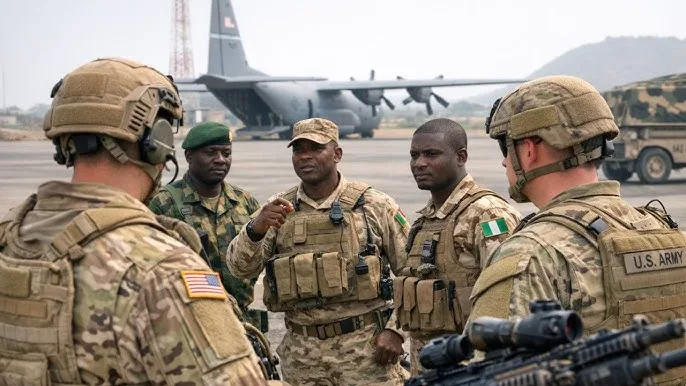 US Military Aircraft Land In Nigeria With Troops
  Tems Becomes First African Woman To Break Billboard Record