
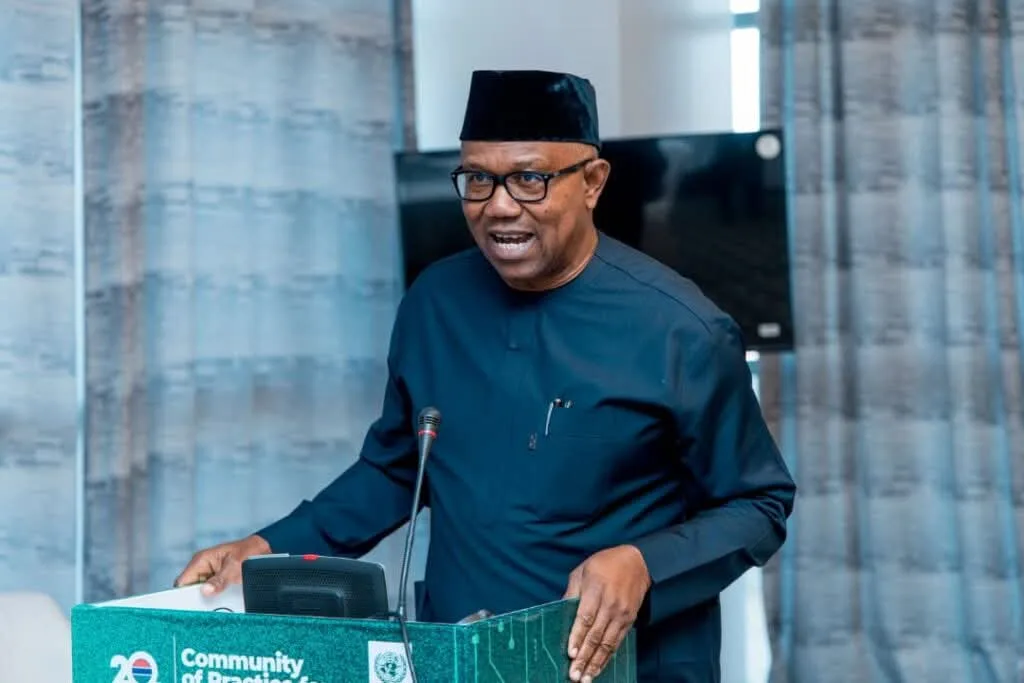
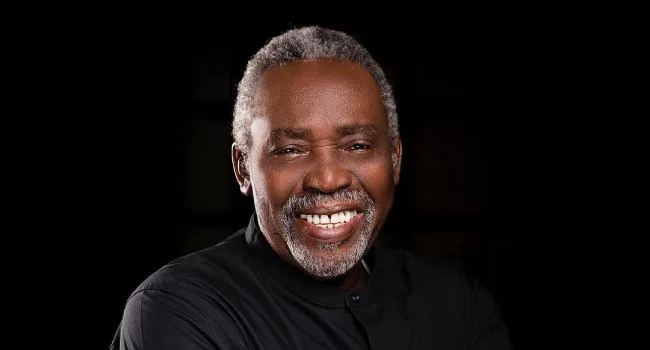
Obi confirmed his defection from the African Democratic Congress on Sunday/Lionscrib
Former presidential candidate confirms exit from African Democratic Congress, citing internal crises and state-sponsored hostility.
Former Anambra State Governor and 2023 Labour Party presidential candidate, Peter Obi, has confirmed his exit from the African Democratic Congress (ADC), dealing another significant blow to Nigeria’s increasingly fragmented opposition ahead of the 2027 general elections.
Obi made the announcement in a personal statement posted on his X (formerly Twitter) account on Sunday, describing the ADC’s internal environment as “toxic” and drawing direct parallels to the crisis that forced him out of the Labour Party just five months ago.
“The same Nigerian state and its agents that created unnecessary crises and hostility within the Labour Party that forced me to leave now appear to be finding their way into the ADC,” Obi said in the statement.
The former governor was, however, quick to distance his decision from personal grievances with key party figures, including ADC National Chairman David Mark and former Vice President Atiku Abubakar, both of whom he said he continued to respect.
He framed his exit as a response to systemic pressures rather than individual conflicts.
“Even within spaces where one labours sincerely, one is sometimes treated like an outsider,” he said, lamenting what he described as a political culture that misreads integrity and service as weakness.
What Comes Next?
All eyes are now on Monday, May 4, when Obi and former Kano State Governor Rabiu Kwankwaso are expected to formally declare their new political platform.
NNPP chieftain Buba Galadima confirmed at a stakeholders’ meeting of the Obi-Kwankwaso (OK) Movement in Abuja on Saturday that both leaders would make the announcement together.
Related: Peter Obi Vows To Be President For Four Years If Elected
While Galadima declined to name the destination party, sources close to both camps, as reported by The Punch, indicate that Obi and Kwankwaso have been finalising plans to join the Nigeria Democratic Congress (NDC), a party linked to former Bayelsa State Governor Seriake Dickson.
The NDC has, for its part, confirmed that discussions are ongoing, though it described the defections as still “under probability” in an official clarification on Sunday.
The NDC’s Deputy National Publicity Secretary, Abdulmumin Ohiare Abdulsalam, said: “My recent response regarding the possibility of defections of the duo of Dr. Rabiu Musa Kwankwaso and Mr. Peter Gregory Obi dwelt more on the realm of probability rather than certainty.”
A Pattern of Political Wandering
Obi’s latest exit marks his third party in just over four years. He joined the Labour Party in May 2022 ahead of the 2023 elections, galvanising a massive youth-driven movement under the “Obidient” banner before finishing third in the presidential poll.
A prolonged leadership crisis within the LP marked by rival factions, court battles, and INEC exclusions eventually pushed him out on December 31, 2025, when he defected to the ADC at a ceremony in Enugu.
His tenure in the ADC, which lasted barely five months, has now also come to an end.
Despite the turbulence, Obi maintained his characteristic idealism in Sunday’s statement, insisting his political motivation remains unchanged.
“I am not desperate to be President, Vice President, or Senate President. I am desperate to see a society that works for all,” he said.
Obidient Movement Alleges APC Sabotage
The national coordinator of the Obidient Movement, Yunusa Tanko, alleged at a press conference in Kano last month that the ruling All Progressives Congress (APC) has been systematically engineering crises within opposition platforms to deny Obi a stable political base ahead of the 2027 elections.
The movement claimed the strategy began shortly after the 2023 polls and has continued through what it described as “orchestrated institutional interference.”
The APC has not publicly responded to those allegations.
The Opposition Chessboard
Obi’s latest move comes as Nigeria’s opposition landscape enters a critical phase, with parties jostling for position and alliances ahead of the January 2027 presidential election.
The Obi-Kwankwaso (OK) Movement, which was formally launched in Abuja on April 20, 2026, claims structures across all 36 states and the FCT, positioning itself as a coordinated national coalition for “systemic reform.”
How quickly Obi can translate another party switch into electoral momentum, and whether the NDC will serve as the stable platform his supporters have long demanded remains to be seen.
 Trump Defends Iran War, Targets ICC In 2026 UN General Assembly Speech
  President Tinubu Extends Working Vacation
  37 Suspected Illegal Miners Die In NSCDC Custody
 ![US President Donald Trump and Canadian Prime Minister Mark Carney pictured during their May 6 meeting at the Oval Office in Washington, DC [Evan Vucci/AP Photo]](https://www.lionscrib.com/wp-content/uploads/2026/09/image-12-e1789635717373-720x410.webp) Trump Warns EU Of ‘Serious Tariffs’ Over Canada Associate Membership Plan
Trump Warns EU Of ‘Serious Tariffs’ Over Canada Associate Membership Plan  South African President Cytril Ramaphosa Falls Sicks After BRICS Summit
  Legendary Actor Olu Jacobs Dies Aged 84