
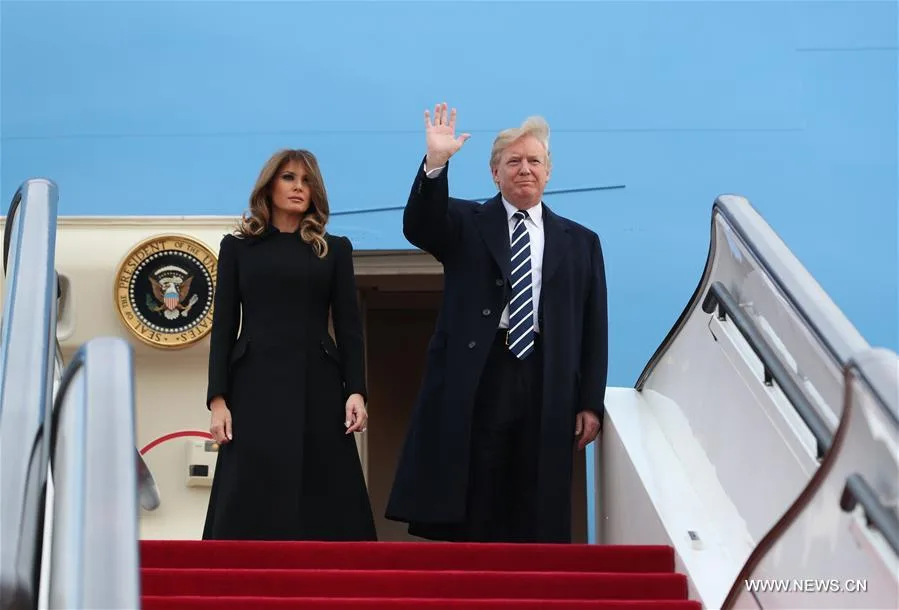
Trump is expected to stabilise relations between US and China/Photo: Xinhua/Pang Xinglei)
The visit is Trump’s seventh face-to-face meeting with Xi Jinping.
United States President Donald Trump has landed in Beijing for a landmark state visit to China, marking the first time an American president has set foot on Chinese soil in nearly nine years.
Trump’s visit, running from May 13 to 15, comes at the invitation of President Xi Jinping and arrives at a moment of heightened bilateral tensions over trade, technology, and defence.
The visit will be Trump’s seventh face-to-face meeting with Xi Jinping and is expected to span three days, with a packed agenda covering the US-Israel war on Iran, trade relations, and the status of Taiwan.
A Whirlwind Schedule in Beijing
Trump’s schedule includes a welcome ceremony, two bilateral meetings with Xi, a state banquet, a tour of the Temple of Heaven, and a tea session all packed into less than 48 hours on the ground.
First Lady Melania Trump is also part of the delegation.
In a notable addition to the trip, Nvidia CEO Jensen Huang joined Trump’s delegation after the US president personally called him following media coverage of his initial absence from the group.
Huang’s inclusion signals the significant role that semiconductor technology and AI are expected to play in the discussions.
More than a dozen high-profile American corporate executives, including Apple’s Tim Cook and Tesla’s Elon Musk, are also travelling as part of the delegation.
What’s on the Table?
The summit carries a broad and consequential agenda. Trump and Xi are set to enter talks on trade, Taiwan, the Iran war, technology, rare earth export controls, and artificial intelligence with analysts warning that the outcome could have major ramifications for global trade, geopolitics, and the rules-based international order.
On the trade front, expected topics include the creation of a bilateral board for managing trade, a government-to-government forum for investment-related issues, and additional agreements spanning aerospace, agriculture, and energy.
Experts also anticipate that Trump and Xi may announce a Chinese purchase of US soybeans or other agricultural products that Beijing had boycotted during the trade war.
Trump is also pushing for progress on rare earths. Xi is expected to seek US concessions on technology export controls, Taiwan, and tariffs, while Trump will likely push for large Chinese purchases of US goods, greater access to China’s rare earth minerals, and progress on fentanyl cooperation.
The Iran Shadow
The visit intersects with a precarious US-Iran ceasefire and a dual blockade of the Strait of Hormuz that is driving up energy prices and weighing on global economic growth.
The summit was originally planned for April but was postponed due to the escalating conflict.
The summit is unlikely to produce meaningful Chinese support for US efforts on Iran. China wants to see the Strait of Hormuz reopened but is not willing to spend real diplomatic capital to bail out the Trump administration from the costs of the war.
Some analysts believe the ongoing war has actually shifted leverage toward Beijing.
Experts have noted that the Iran war could give China greater leverage with Trump, given that the US has diverted resources away from South Korea and Japan to the Middle East, creating potential vulnerabilities around Taiwan.
Taiwan Tensions Loom
Taiwan will be watching the summit closely, particularly worried that Beijing will persuade Trump to express support for peaceful unification, or that Trump will negotiate with Xi on arms sales to Taiwan which would undermine one of President Ronald Reagan’s Six Assurances.
Trump has already signalled openness to discussing arms sales to Taiwan with Xi, adding to Taipei’s anxieties about what might be conceded behind closed doors.
A Modest Reset, Not a Revolution
Both countries expect to announce a return visit to the United States by Xi in the autumn, and Trump is also likely to attend the November APEC meeting in Shenzhen, China.
However, analysts are tempering expectations. The Council on Foreign Relations described the meeting as an effort to stabilise US-China relations rather than resolve long-standing disputes, citing continuing disagreements over China’s economic policies, Taiwan, freedom of navigation in the South China Sea, and Beijing’s relations with strategic adversaries including Russia, Iran, and North Korea.
The visit is expected to represent a modest step toward greater stability and predictability in what analysts describe as the world’s most important bilateral relationship but the deep structural tensions between Washington and Beijing are unlikely to be resolved in 48 hours in Beijing.
 From Lagos to Paris: How Street Model Rachel Ojuromi Made Her Chanel Runway Debut
 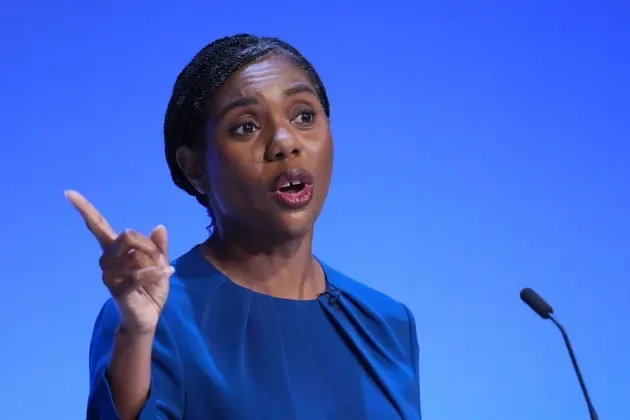 Badenoch Hits Out At Reform In Fiery Conference Speech Amid ‘Englishness’ Row
 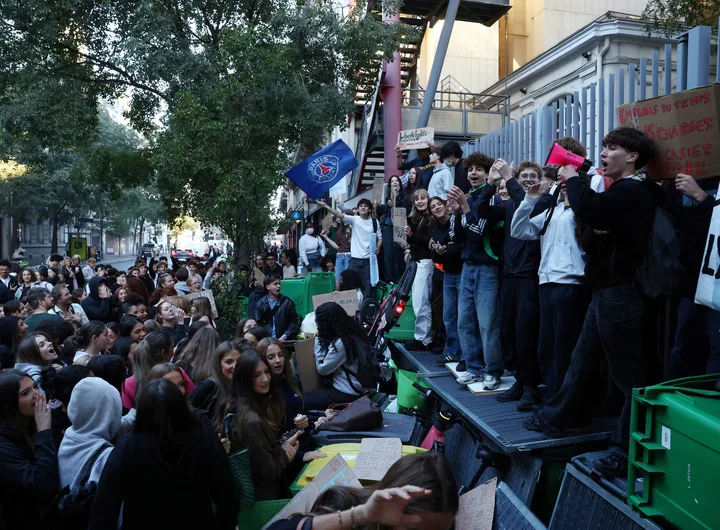 France Rocked By Nationwide Student Protests Over Education Crisis
 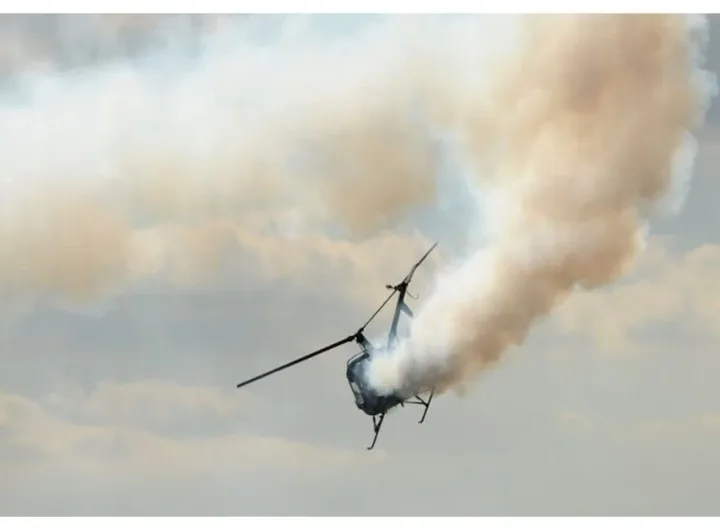 Tinubu Announces Three-Day National Mourning For Air Force Personnel Killed In Plane Crash
  Brazil’s Presidential Election Heads To A Runoff
  Tinubu’s 2026 Independence Day Speech: From Reform To Prosperity, But Nigerians Await The Results