

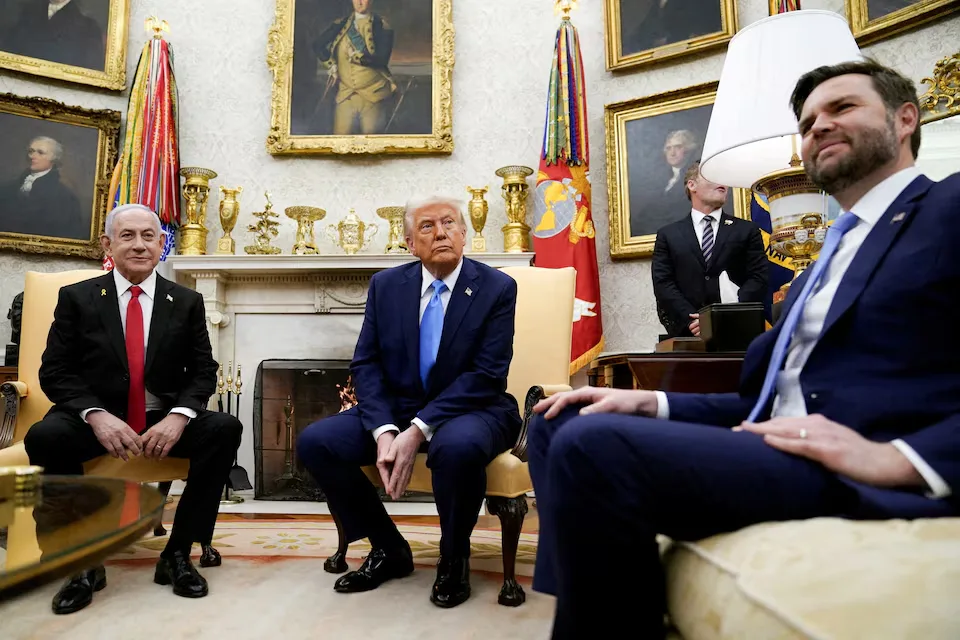
Prime Minister Benjamin Netanyahu of Israel speaks with US President Donald Trump during their Oval Office meeting at the White House on April 7, 2025, in Washington, DC. Photo credit: Kevin Dietsch / Getty Images
Netanyahu has rejected Trump’s 15-point Gaza plan, insisting Israeli forces won’t withdraw until Hamas is genuinely and fully disarmed.
Israeli Prime Minister Benjamin Netanyahu has turned down US President Donald Trump’s 15-point roadmap for Gaza, declaring that Israeli forces will stay put until Hamas is fully and verifiably disarmed.
The rejection deepens the standoff over a peace plan the White House unveiled last September, with Hamas insisting it remains committed to the deal while far-right members of Netanyahu’s coalition push him to abandon it altogether.
Trump’s Board of Peace announced last month that it had secured a deal for the total disarmament of Hamas and other armed factions operating in Gaza.
Hamas, however, said surrendering its heavy weapons would only happen once Israel halted “all forms of aggression” and pulled its troops out of the territory.
A senior Board of Peace official said on Sunday that the American-backed plan still represents the sole path forward for the region.
Despite agreeing to an initial ceasefire in Gaza back in October, Israel has continued carrying out strikes there.
“Israel rejects the 15-point document,” Netanyahu told his cabinet on Sunday.
He added that the Israeli military “will not carry out any withdrawal until Hamas is genuinely disarmed and will continue to thwart threats against our forces and our citizens.”
Related: ICC Issues Arrest Warrant For Israeli Prime Minister Benjamin Netanyahu
A Hamas official speaking to the BBC on Sunday said the group “reaffirms it commitment” to the agreement and stood ready “to engage seriously and responsibly in implementing” the 15-point plan.
The official urged mediators to make sure “that all parties comply with what has been agreed”.
Israel’s pushback marks another setback for Trump’s Gaza peace initiative, first announced in September of last year.
The plan called for establishing the Board of Peace to supervise its rollout, alongside Hamas’s disarmament, an Israeli troop withdrawal, and rebuilding efforts across Gaza.
Analysis
Netanyahu’s position isn’t unexpected, but the delay in stating it plainly may hint at how tricky his balancing act has become.
He is evidently unhappy with Trump’s proposal, yet reluctant to publicly cross Washington, his most important ally.
Barely a week has passed since Trump described what he called a “monumental step toward lasting peace and security,” the news that Hamas had, for the first time, agreed to disarm on the condition that Israeli forces leave Gaza.
By Sunday, Netanyahu made clear that wasn’t happening on his watch.
Hamas, he insisted, must disarm first, and it could not be some “fictitious disarmament,” the process had to be genuine.
In practice, any disarmament paired with an Israeli withdrawal would almost certainly have to unfold in stages.
Netanyahu said he was currently in talks with US officials on how to proceed.
“They have ideas; some of them are acceptable to us and some are not, and we know how to stand our ground on these matters,” he said.
With Israeli elections just months away and pressure mounting from within his right-wing coalition for a harder line on Gaza, Netanyahu is unlikely to offer any concessions soon.
Hardliners in his coalition, including National Security Minister Itamar Ben Gvir, who branded the draft “not acceptable,” have pushed for a fresh cabinet vote to scrap the Gaza plan entirely.
Nickolay Mladenov, the senior diplomat overseeing the plan’s implementation, defended it on Sunday, saying talks were continuing in hopes of reaching a “positive outcome”.
Speaking to Israel’s Channel 12, the Board’s high representative for Gaza said Israel had been asked “to give the process a chance”, calling it “the only way forward” to prevent a repeat of the 7 October 2023 Hamas attack.
Mladenov described the plan as one built on a framework that is “verifiable, that is reversible, that at each stage can be stopped, and that we have built up with a very clear-eyed understanding of what are the challenges ahead”.
He also stressed that Israel would not be obligated to withdraw until Hamas’s disarmament steps could be independently verified.
United Nations figures show roughly 1.9 million people, some 90% of Gaza’s population, have been displaced since the war began.

The conflict was ignited by the Hamas-led assault on southern Israel on 7 October 2023, which killed about 1,200 people and saw 251 taken hostage.
Israel’s subsequent military campaign in Gaza has killed more than 73,000 people, according to the territory’s health ministry, whose figures the United Nations regards as reliable.
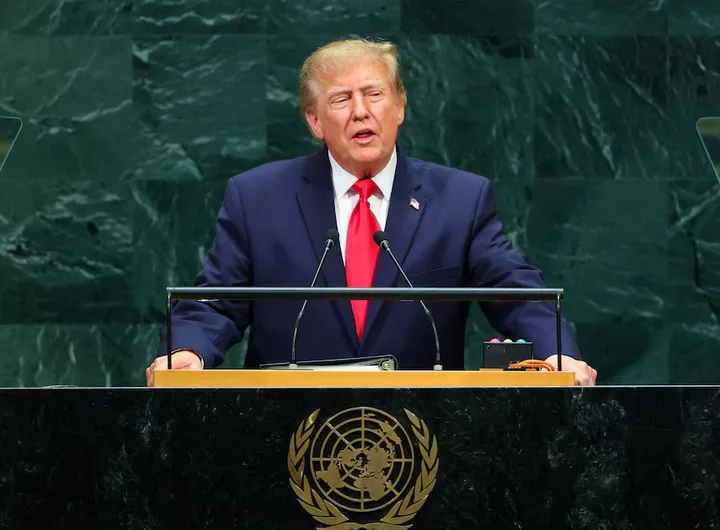 Trump Defends Iran War, Targets ICC In 2026 UN General Assembly Speech
  President Tinubu Extends Working Vacation
  37 Suspected Illegal Miners Die In NSCDC Custody
 ![US President Donald Trump and Canadian Prime Minister Mark Carney pictured during their May 6 meeting at the Oval Office in Washington, DC [Evan Vucci/AP Photo]](https://www.lionscrib.com/wp-content/uploads/2026/09/image-12-e1789635717373-720x410.webp) Trump Warns EU Of ‘Serious Tariffs’ Over Canada Associate Membership Plan
Trump Warns EU Of ‘Serious Tariffs’ Over Canada Associate Membership Plan 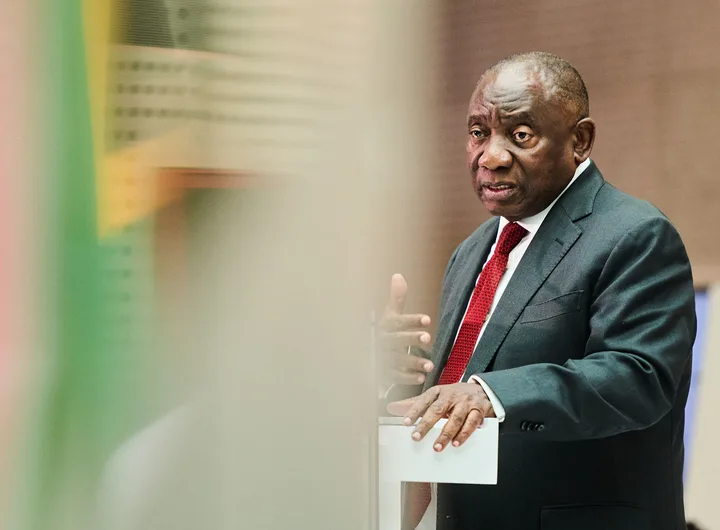 South African President Cytril Ramaphosa Falls Sicks After BRICS Summit
 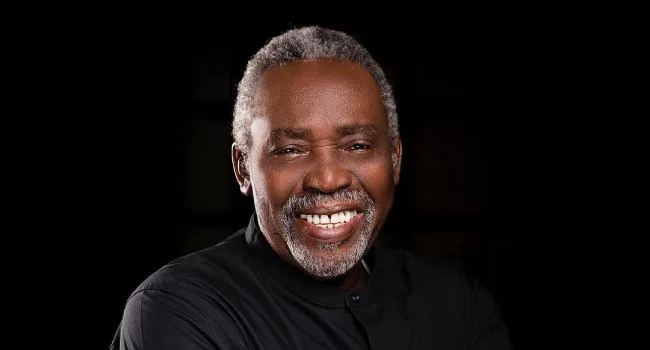 Legendary Actor Olu Jacobs Dies Aged 84