
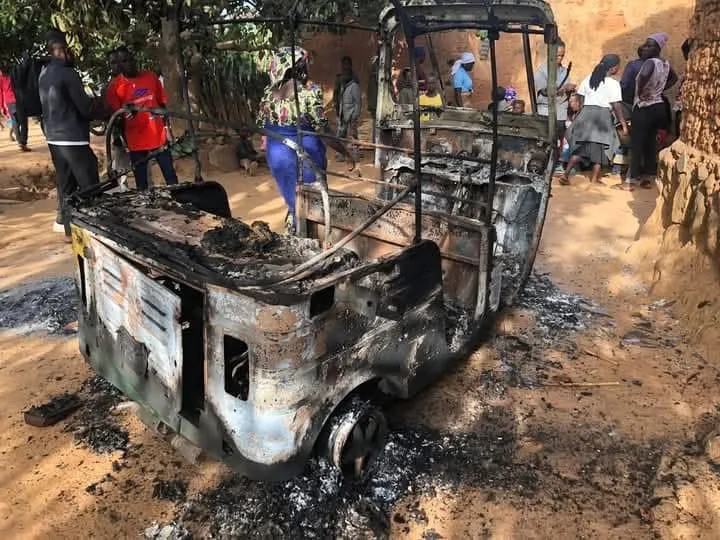
Jos has suffered several attacks in decades/Lionscrib News
For decades, religious and ethnic tensions have repeatedly fractured the city of Jos.
A 48-hour curfew has been declared in sections of Jos, Plateau State, after gunmen stormed a bar and opened fire, triggering a wave of deadly retaliatory violence.
The initial attack on the drinking establishment left 12 people dead.
An angry mob subsequently struck back, killing an additional 10 people in the aftermath.
Plateau state governor Caleb Manasseh Mutfwang announced the curfew, confirming that an investigation had been launched and pledging that those behind the killings would face justice.
He condemned the violence as “barbaric and unprovoked,” and directed security agencies to pursue all those responsible.
Plateau state has long been regarded as one of Nigeria’s most volatile regions.
Paul Mancha, chairperson of the Plateau state youth council, warned that the actual death toll may be far higher than reported.
“People were here in the evening and unfortunately, wicked terrorists came and attacked our people,” he told Reuters.
“We have counted scores of people who are now dead and then so many others are also in the hospital receiving treatment.”
Local residents also revealed that threats had been circulating on social media platforms ahead of the assault.
Related: Terrorists Ambush Soldiers In Kebbi, Kill 13
The curfew, which took effect at midnight local time, is set to remain in place until April 1.
Residents have been instructed to remain indoors while security personnel conduct intensified patrols and maintain a strong presence across affected areas.
Troops and other security forces were rapidly deployed following the shooting to secure the area and restore order.
Plateau state sits in Nigeria’s central belt, a region frequently torn by conflict between different communities — particularly between predominantly Muslim herders and largely Christian farming communities, with disputes commonly centred on access to land and water.
Nigeria continues to grapple with a range of overlapping security crises across its regions — from a long-running Islamist insurgency in the northeast to banditry and kidnapping in the northwest and central zones.
Security analysts note that these compounding pressures have strained available resources and made coordinated responses increasingly difficult.
Sunday’s attack serves as a stark reminder of the fragile state of local security and how swiftly violence can shatter everyday life.
While authorities maintain that the situation is being brought under control, the curfew itself signals the gravity of the threat and the urgent need to prevent further bloodshed.
 Trump Calls For New Ukrainian Leadership Amid Clash With Zelensky Over US-Russia Diesel Agreement
  Thousands Detained As Massive Protests Erupt In India Over Alleged Electoral Fraud
  Atiku Mocks Tinubu As A “Dull Student,” Says Fuel Discount Was Copied From His Proposal
  South African Human Rights Champion Navi Pillay Wins 2026 Nobel Peace Prize
  Unrest Erupts in New York After ICE Agent Shoots Man During Immigration Operation
  Tinubu Announces 30-Day Fuel Discount To Ease Cost Of Living
  “My baby is coming anytime soon, it may be twins” — Mr Eazi Shares Excitement Ahead Of Fatherhood