
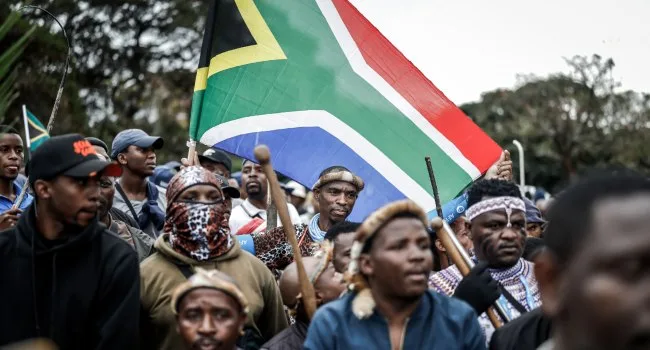
Members of South Africa's traditional Zulu warrior corps, the Amabutho, carried the national flag as they marched in Durban on June 30, 2026, joining a demonstration organized by the "March and March" movement. The protest coincided with a deadline that citizen-led groups had unilaterally set for undocumented foreign nationals to leave the country/AP
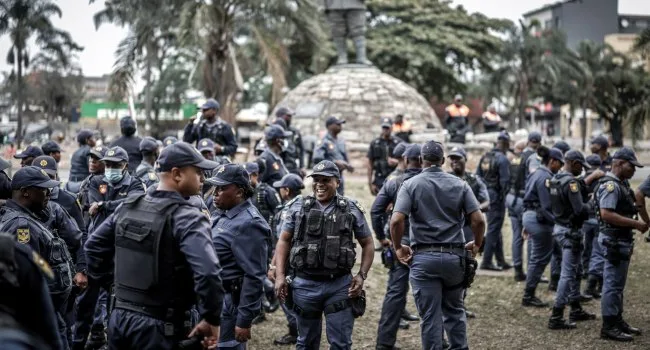
Police deployed heavily across affected areas to head off violence and looting from xenophobic mobs, as hundreds of foreign nationals sought shelter in multiple cities, desperately appealing for assistance to evacuate.
Police mounted a heavy presence to head off violence and looting from xenophobic groups, even as hundreds of foreign nationals sought refuge in several cities, desperate for help getting home.
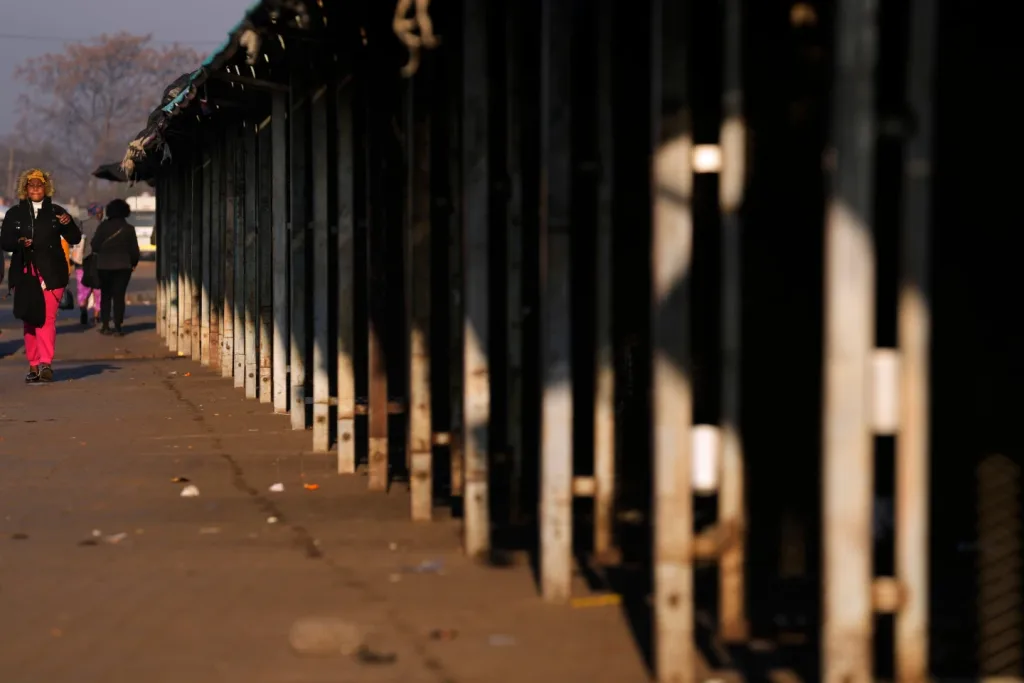
Most businesses kept their doors closed, and downtown Johannesburg’s streets fell eerily quiet as commuters made their way to work under the watchful eye of officers stationed across the city.
The demonstrations were organized by a loose alliance of smaller political parties and grassroots vigilante groups that analysts describe as surprisingly well-coordinated and well-funded, with a heavy social media footprint that has included disinformation already fact-checked by AFP.
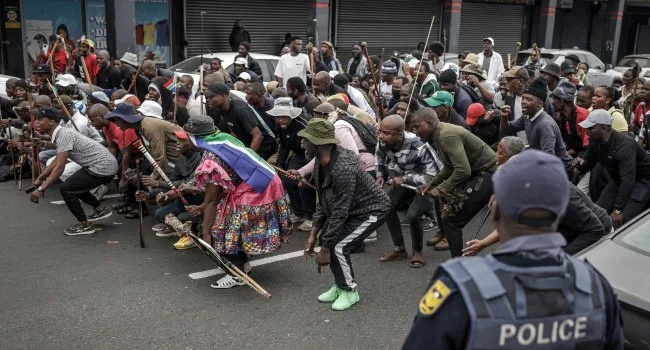
In Durban, in the country’s southeast, small clusters of protesters dressed in traditional Zulu attire and carrying sticks and shields assembled in a park, singing and chanting “abahambe” (“let them go”), while security personnel monitored the scene.
“I travelled a bit in Africa. All these countries are messed up, and South Africa is the America of Africa,” protester Selwyn Anderson told AFP.
The 64-year-old retiree alleged that undocumented migrants had taken control of numerous small businesses throughout the country.
Anti-immigrant violence in recent weeks has already claimed at least four lives, two Mozambicans, one Ethiopian, and one Malawian, prompting multiple African governments to arrange flights or buses to bring their citizens home.
Migration Turned Into A Political Tool
South Africa, despite being among the continent’s richest nations, draws large numbers of migrant workers even as it struggles with unemployment exceeding 30 percent, widespread crime, and crumbling public services in numerous regions.
With local government elections set for November, labor analyst Dale McKinley argued that the anti-migrant sentiment has been turned into a political instrument.
“The xenophobic groups have got it wrong,” he told AFP.
“This is a problem of governance, corruption, and mismanagement.”
Over the weekend, Uganda revealed plans for an “evacuation” of close to 750 of its nationals set to begin within days.
By the time Tuesday’s informal deadline arrived, thousands more, mainly Malawians and Zimbabweans, had converged on Cape Town and Johannesburg, hoping for assistance to return home.
Many reported being evicted by landlords or dismissed by employers worried about official penalties or vigilante reprisals.
“I decided to go to avoid being attacked,” said Malawian Peter Madsoan, 45, who waited Monday in the port city of Durban along with several thousand others for a bus home.
“I am a breadwinner back at home in Malawi,” said the builder.
“It is better for me to go than to die in South Africa.”
Zimbabwean Evelyn Chinooneka, 29, said she had spent days camped with her 10-month-old baby outside the Zimbabwean consulate in Cape Town.
“It was raining. All the clothes are wet now. We need our buses to come,” said Chinooneka, who had spent four years working on a farm near Cape Town before being told to leave.
A “Rolling Mass Action”
Jacinta Ngobese-Zuma, leader of the anti-immigrant March and March movement, told reporters last week that June 30 would mark the start of what she called a national march to freedom, a sustained campaign of action that would continue until every undocumented migrant had been deported.
“We are not calling for violence… No one will be killed on the 30th of June and no looting will take place in our name,” she said.
Wary of a repeat of the chaos five years earlier, when roughly 350 people died during days of rioting and looting, authorities have deployed extensive security forces and issued warnings against opportunistic criminal activity.
That earlier unrest, in July 2021, had been ignited by former president Jacob Zuma’s brief imprisonment after he refused to cooperate with a corruption inquiry.
As the June 30 deadline approached, President Cyril Ramaphosa unveiled intensified government measures targeting illegal immigration and appealed to traditional leaders to draw on their influence to ease tensions.
KwaZulu-Natal premier Thami Ntuli said: “Whatever our concerns about undocumented migration, however legitimate the frustrations beneath them, we will not allow this province to be set alight a second time, whether by criminality or by xenophobia.”
South Africa has seen deadly anti-migrant violence before, including riots in 2008 that left 62 people dead.
What sets this moment apart, however, is that for the first time, multiple governments have coordinated simultaneous repatriation efforts for their citizens.
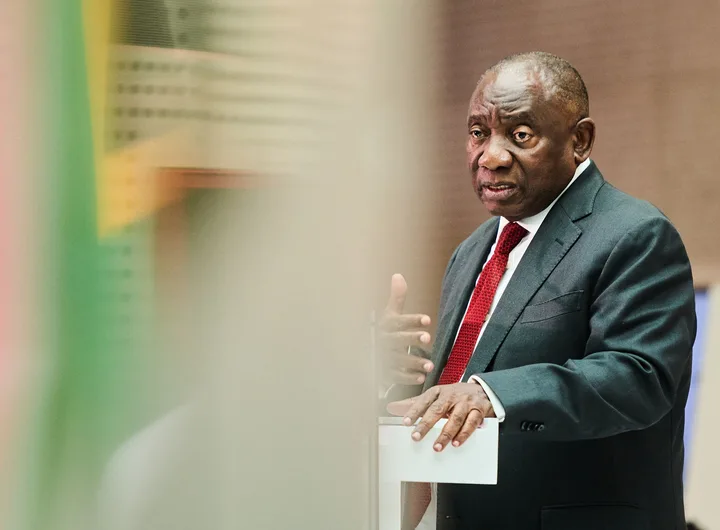 South Africa Unveils New Measures Against Gender-Based Violence After String of Femicides Sparks National Outrage
 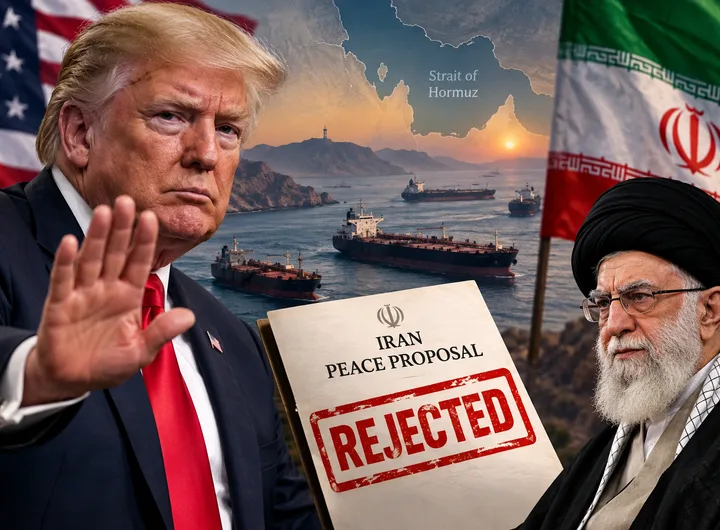 Why Trump Rejected Iran’s Peace Proposal
 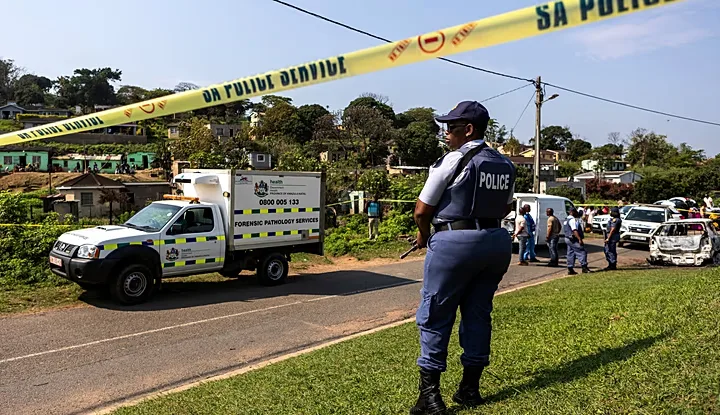 At Least 27 Dead in Two Separate Mass Shootings in South Africa
 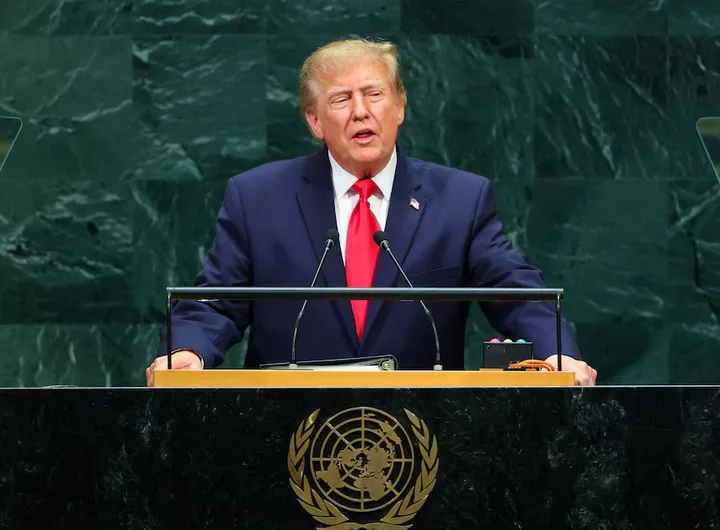 Trump Defends Iran War, Targets ICC In 2026 UN General Assembly Speech
  President Tinubu Extends Working Vacation
  37 Suspected Illegal Miners Die In NSCDC Custody