
Museveni says the era of sleeping in Uganda is over
The 81-year-old president vows a term of “no more sleep” for Ugandans as critics question the legitimacy of his latest election victory.
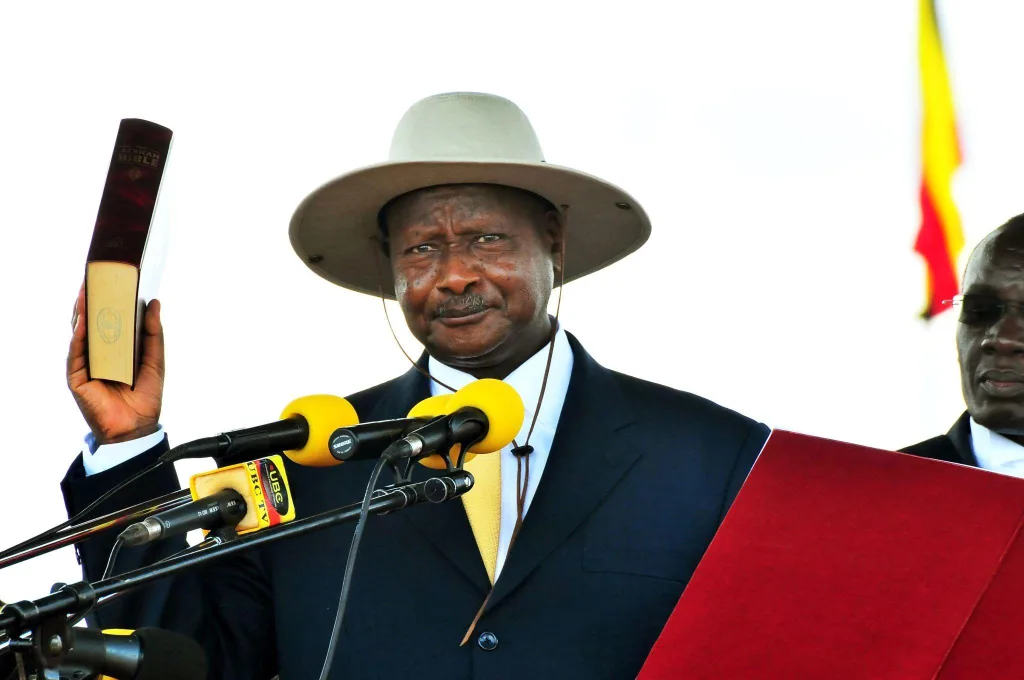
Uganda’s President Yoweri Kaguta Museveni has once again placed his hand on the Bible, this time to begin a seventh term in office, cementing his status as one of Africa’s longest-serving heads of state.
The swearing-in ceremony took place on Tuesday, May 12, 2026, at the Kololo Ceremonial Grounds in the capital, Kampala, drawing thousands of Ugandans, senior government officials, and a host of regional leaders.
Presidents from Burundi, Togo, the Democratic Republic of Congo, Tanzania, Somalia, Gabon, Mozambique, Ethiopia, and South Sudan were among those in attendance.
The day was declared a public holiday, with around 40,000 guests expected, including 35 heads of state, 30 diplomats, and delegates from liberation movements across the continent.
A Landslide, But Not Without Controversy
Museveni won 71.65 percent of the vote in the January elections, according to Uganda’s Electoral Commission.
His closest rival, opposition politician and musician Bobi Wine whose real name is Robert Kyagulanyi won 24.72 percent but dismissed the results as fraudulent, alleging widespread ballot stuffing and electoral malpractice.
The election took place amid a nationwide internet blackout and reports of intimidation and abductions of opposition supporters.
Human Rights Watch accused Ugandan authorities of “intensified attacks” on the National Unity Platform opposition and its supporters after the election, reporting mass arrests and the disappearance of two senior leaders.
Related: 30 Killed In Ugandan Post-election Violence
Uganda’s Supreme Court, however, cleared the path for the inauguration after allowing the withdrawal of a presidential election petition challenging Museveni’s victory, with the majority of justices ordering each party to bear its own costs as part of the healing process.
Security Tight, Atmosphere Festive
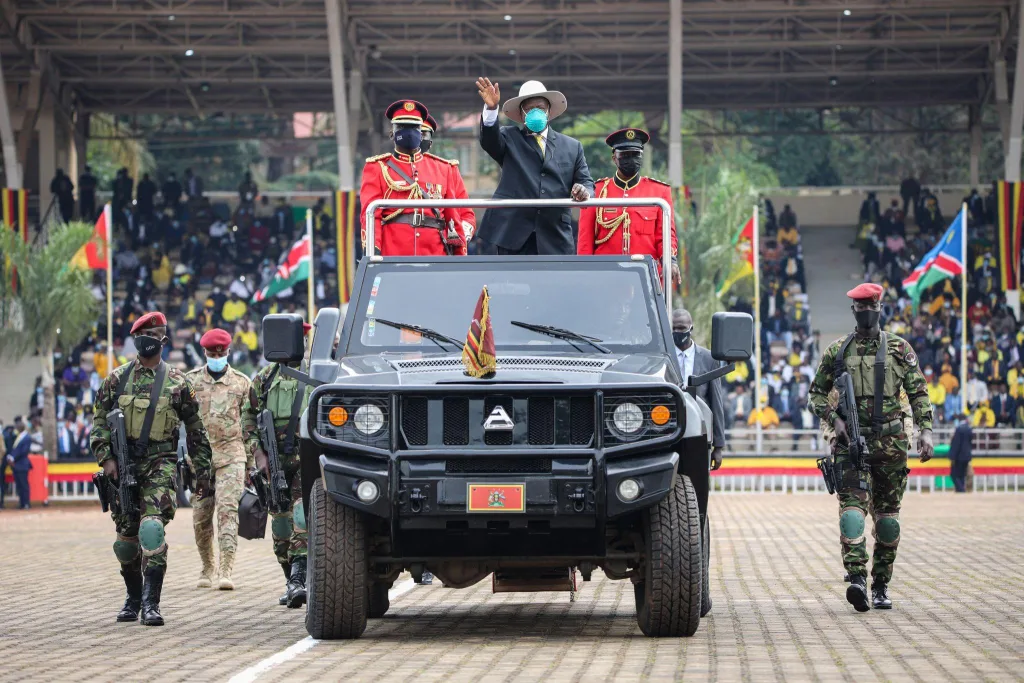
Security was tight across Kampala in the lead-up to the ceremony, with armoured vehicles and heavy police deployment visible on the streets, as officials maintained that the measures were vital in preserving public order and preventing disruptions.
Despite the tension, the mood inside the grounds was celebratory, with supporters of the long-ruling National Resistance Movement (NRM) gathering to witness their leader take the oath for what will be a fifth consecutive elective term.
“No More Sleep” — Museveni’s Promise
In his inauguration address, Museveni called on Ugandans to embrace a new era of productivity and economic transformation.
He described the new term as a “Kisanja of no more sleep for all Ugandans,” urging citizens to take advantage of the economic growth the NRM has fostered since coming to power in 1986.
He highlighted the NRM’s legacy of peace, infrastructure development including roads, electricity, piped water, railways, and airports as well as social investments in schools and health centres across Uganda.
He also congratulated his party for winning presidential, parliamentary, and local government elections by wide margins, while taking aim at opposition parties he accused of using violence during the electoral process.
Four Decades and Counting
Since taking office in 1986, Museveni has twice changed Uganda’s constitution, first to remove presidential term limits, and later to remove the age limit, allowing him to continue contesting elections indefinitely.
Ironically, the former rebel leader once declared that Africa’s biggest problem was leaders who overstayed their welcome.
His new five-year term is expected to run until 2031, by which time he will have governed Uganda for 45 years.
It remains unclear who will eventually succeed him.
His son, Chief of Defence Forces General Muhoozi Kainerugaba, is widely seen as a likely candidate.
Africa Watching
Museveni’s swearing-in comes at a time when questions of democratic consolidation and leadership transition are front and centre across the African continent.
For his supporters, he remains a stabilising force who lifted Uganda from post-independence chaos.
For his critics, his continued hold on power represents a democratic regression that the region can ill afford.
 From Lagos to Paris: How Street Model Rachel Ojuromi Made Her Chanel Runway Debut
  Badenoch Hits Out At Reform In Fiery Conference Speech Amid ‘Englishness’ Row
  France Rocked By Nationwide Student Protests Over Education Crisis
  Tinubu Announces Three-Day National Mourning For Air Force Personnel Killed In Plane Crash
  Brazil’s Presidential Election Heads To A Runoff
  Tinubu’s 2026 Independence Day Speech: From Reform To Prosperity, But Nigerians Await The Results