
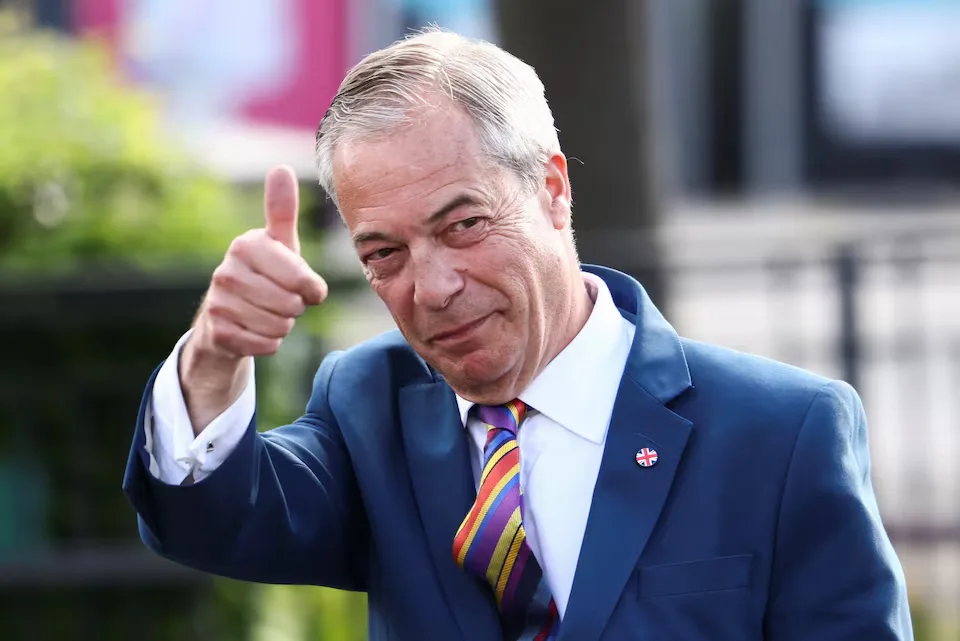
Reform UK leader Nigel Farage reacts at Havering Town Hall in the London Borough of Havering, after local election results were announced on May 8, 2026. (Photo: Jack Taylor/Reuters)
Britain’s political landscape is shifting dramatically. In what analysts are calling one of the most significant transformations in a century, the grip of the two traditional parties Labour and the Conservatives is loosening fast. And for Prime Minister Keir Starmer, the ground couldn’t be shaking at a worse time.
Prime Minister Keir Starmer’s Labour Party has taken a severe beating in England’s local elections, with early results painting a grim picture for the ruling party and raising fresh questions about whether Starmer can survive the mounting pressure to step aside.
The setback comes barely two years after Labour swept to power in a historic national landslide.
Across traditional Labour strongholds in central and northern England, as well as parts of London, the party haemorrhaged seats at an alarming rate.
The biggest winner from Labour’s misfortune was Nigel Farage’s populist Reform UK, which captured over 300 council seats in England and is now positioned to become the main opposition party in both Scotland and Wales.
“The picture has been pretty much as bad as anyone expected for Labour, or worse,” said John Curtice, Britain’s most respected pollster.
Friday’s elections covered 136 local councils in England alongside the devolved parliaments in Scotland and Wales, making them the most consequential public opinion test before the next general election, which is not due until 2029.
Several Labour lawmakers had privately warned that a poor showing in Scotland, a loss of power in Wales, and failure to defend the approximately 2,500 council seats it held in England would reignite calls for Starmer to either resign or at least signal when he plans to go.
However, allies of the prime minister were swift to close ranks around him.
Defence Minister John Healey dismissed the idea of a leadership change, telling Times Radio: “The last thing voters wanted was the potential chaos of a leadership election,” before adding, “I think he can still deliver, he can still turn it round.”
A Fracturing Political Order
The early results underscored a broader realignment in British politics, with both Labour and the Conservatives surrendering ground, Labour to Reform on the right, and to the left-wing Green Party on the other end of the spectrum.
Nationalist parties meanwhile remained dominant in Scotland and Wales.
Farage declared that the results represented “a historic change in British politics.”
The losses in some key constituencies were nothing short of devastating for Labour.
In Tameside, Greater Manchester, the party lost control of the council for the first time in nearly half a century after Reform claimed all 14 seats Labour had been defending.
In Wigan, a former mining town Labour has controlled for over 50 years, every one of the 20 seats the party was defending fell to Reform.
In Salford, Labour managed to hold only three of its 16 defended seats.
“The results were soul-destroying,” said Rebecca Long-Bailey, Labour’s MP for Salford.
While ruling parties typically lose ground in mid-term local elections, analysts projected that Labour’s total losses could rival the more than 2,000 seats the Conservatives shed under John Major in 1995, a period synonymous with governmental scandal and dysfunction.
By early count, Reform had gained 335 council seats in England, while Labour dropped 247 and the Conservatives lost 127.
A Leader Under Siege
Starmer came to power in 2024 riding one of the largest parliamentary majorities in modern British history, promising to restore stability after years of political turbulence.
Instead, his tenure has been plagued by repeated policy reversals, a revolving door of advisers, and controversy, most notably the appointment and subsequent dismissal of Peter Mandelson as Britain’s ambassador to the United States, sacked after nine months due to his associations with the late convicted sex offender Jeffrey Epstein.
Despite the pressure, Starmer has insisted he will lead Labour into the next general election.
The party has never ousted a sitting prime minister in its 125-year history, a precedent that offers him some protection.
He is further shielded by the fact that the two most talked-about potential successors Greater Manchester Mayor Andy Burnham and former Deputy Prime Minister Angela Rayner are not currently in a position to mount leadership challenges, and other potential rivals appear reluctant to make a move.
Energy Minister Ed Miliband’s team also moved to quash a report in The Times claiming he had advised Starmer to consider publicly mapping out a timeline for his exit.
Most of the remaining results, including those from the Scottish and Welsh elections, were expected to be declared later Friday.
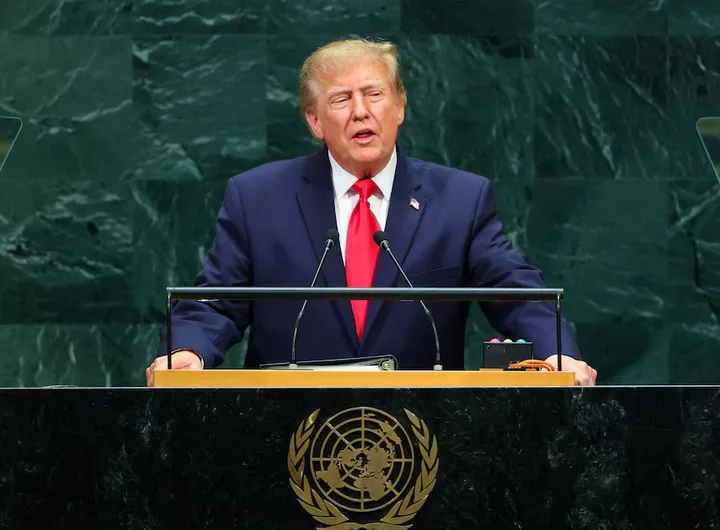 Trump Defends Iran War, Targets ICC In 2026 UN General Assembly Speech
  President Tinubu Extends Working Vacation
  37 Suspected Illegal Miners Die In NSCDC Custody
 ![US President Donald Trump and Canadian Prime Minister Mark Carney pictured during their May 6 meeting at the Oval Office in Washington, DC [Evan Vucci/AP Photo]](https://www.lionscrib.com/wp-content/uploads/2026/09/image-12-e1789635717373-720x410.webp) Trump Warns EU Of ‘Serious Tariffs’ Over Canada Associate Membership Plan
Trump Warns EU Of ‘Serious Tariffs’ Over Canada Associate Membership Plan 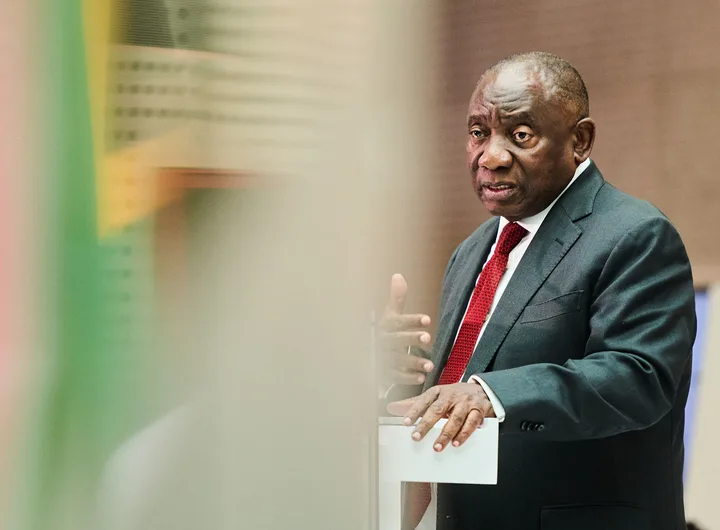 South African President Cytril Ramaphosa Falls Sicks After BRICS Summit
 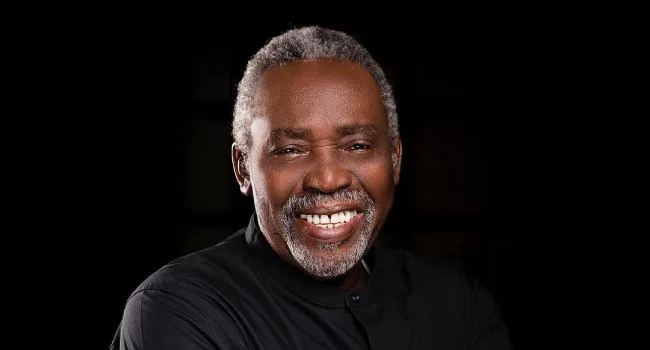 Legendary Actor Olu Jacobs Dies Aged 84