
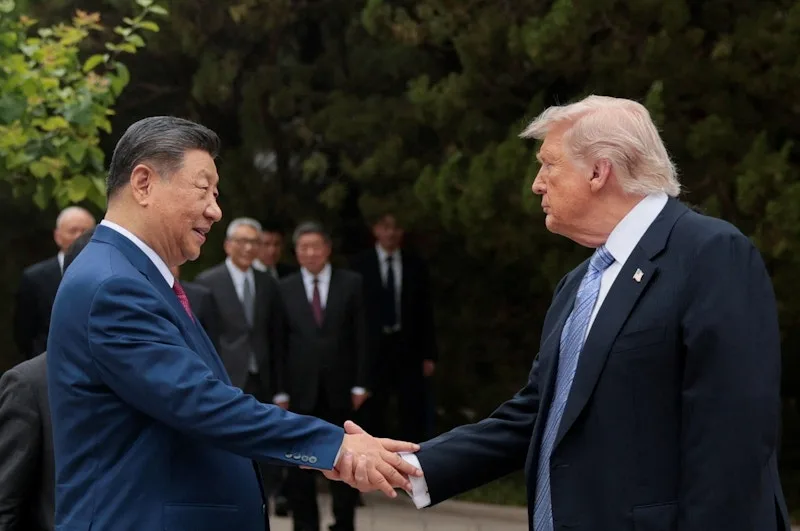
![Russian President Vladimir Putin and China's President Xi Jinping are pictured together during a welcoming ceremony held at the Great Hall of the People in Beijing on Wednesday. [Maxim Shemetov/Pool/Reuters]](https://www.lionscrib.com/wp-content/uploads/2026/05/image-34.webp)
Russian President Vladimir Putin and China's President Xi Jinping are pictured together during a welcoming ceremony held at the Great Hall of the People in Beijing on Wednesday. [Maxim Shemetov/Pool/Reuters]
Putin visited China barely two days after Trump’s visit.
In one of the most symbolically loaded diplomatic sequences of 2026, Russian President Vladimir Putin touched down in Beijing on May 19, barely 48 hours after United States President Donald Trump had departed the same city.
The back-to-back visits were not accidental. They were, in many ways, a carefully choreographed display of China’s growing confidence as the indispensable power at the centre of a fracturing global order.
Putin’s two-day state visit, running from May 19 to 20, arrives at a moment heavy with anniversaries, the 30th year of the China-Russia strategic cooperative partnership and the 25th anniversary of the 2001 Sino-Russian Treaty of Good-Neighborliness and Friendly Cooperation.
These milestones provided the official framing, but the real story runs deeper. The Xi-Putin summit’s significance lies as much in its timing as in its substance.
Trump left Beijing touting trade deals, yet there is little evidence that the US and China made significant progress on the most contentious issues dividing Washington and Beijing, including Taiwan and the US-Israel war on Iran.
That stalemate, analysts say, suited Putin perfectly. It confirmed what Moscow needed to know: Beijing has no intention of sacrificing its relationship with Russia on the altar of improved US ties.
The relationship between Russia and China has deepened considerably since Moscow’s full-scale invasion of Ukraine in 2022.
Related: Trump Departs China With Limited Gains As Xi Summit Ends With Pageantry But Few Breakthroughs
China has become Russia’s top trading partner, its largest customer for oil and gas, and has continued supplying dual-use high-tech components that Western nations allege feed Russia’s weapons industries.
Figures released ahead of the visit were telling, Russia’s oil exports to China grew by 35 percent in the first quarter of 2026 alone.
Yet for all the warmth, the partnership is increasingly asymmetric.
As Timothy Ash of Chatham House bluntly observed, “Putin needs this more than Xi. Russia is now the junior, dependent partner, following Putin’s disastrous war in Ukraine.”
The power dynamics have quietly shifted: where once Moscow and Beijing engaged as rough equals, today Russia increasingly relies on Chinese economic lifelines and technological access to sustain both its war effort and its sanctioned economy.
China, for its part, is playing a longer game. Beijing is positioning itself as a neutral superpower, a mediator capable of engaging rival powers on its own terms, without publicly aligning with either Washington or Moscow.
Hosting Trump and Putin within the same week is less a contradiction than a masterstroke, signalling to the world that no major global issue can be resolved without China’s involvement.
Looming over the summit is the ongoing conflict in Iran, which has rattled global energy markets by largely disrupting the Strait of Hormuz.
The crisis has heavier economic consequences for China than for Russia, though both countries have shared intelligence and technology with Tehran and neither wants prolonged regional instability.
On Ukraine, analysts expect little change. China will reiterate its support for negotiations while stopping well short of pressuring Moscow toward any specific outcome.
The partnership remains, as one analyst put it, “very stable, very important for both countries,” a relationship defined more by mutual strategic interest than genuine ideological alignment.
What the Putin visit ultimately confirms is this: the post-Cold War world, once anchored by American primacy, is giving way to something more multipolar and more contested.
And Beijing, by hosting the leaders of the world’s two most sanctioned and scrutinised powers in the same week, has made clear it intends to write the rules of whatever order comes next.
 UK Prime Minister’s First Overseas Visit Signals Strong Support For Ukraine
  Liberia Receives First Batch Of US Deportees Under Disputed Agreement
  Atiku Says Obasanjo Has No Electoral Value, Arewa Made Him President
 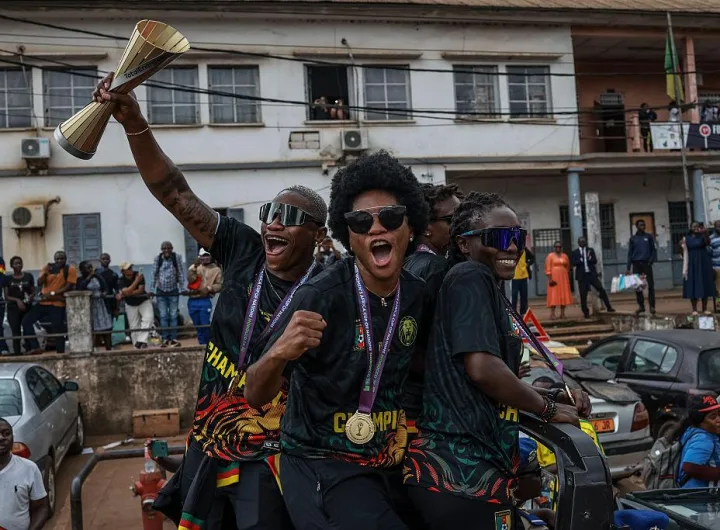 Cameroon’s Indomitable Lionesses Receive Heroic Welcome After Historic WAFCON Triumph
 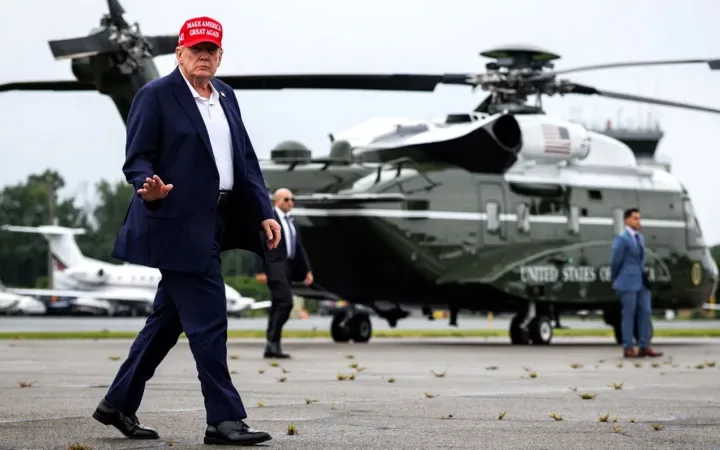 US Vs Iran: Trump Threatens To Bomb Oman
 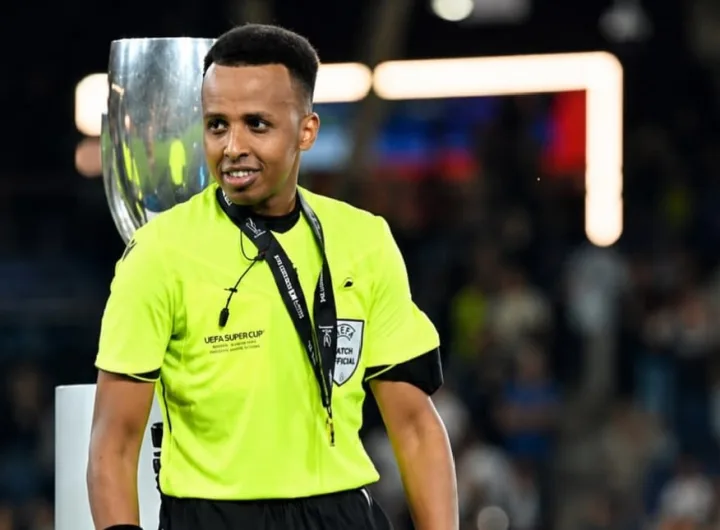 Omar Artan Makes History As First Non-European To Referee A UEFA Super Cup Final