
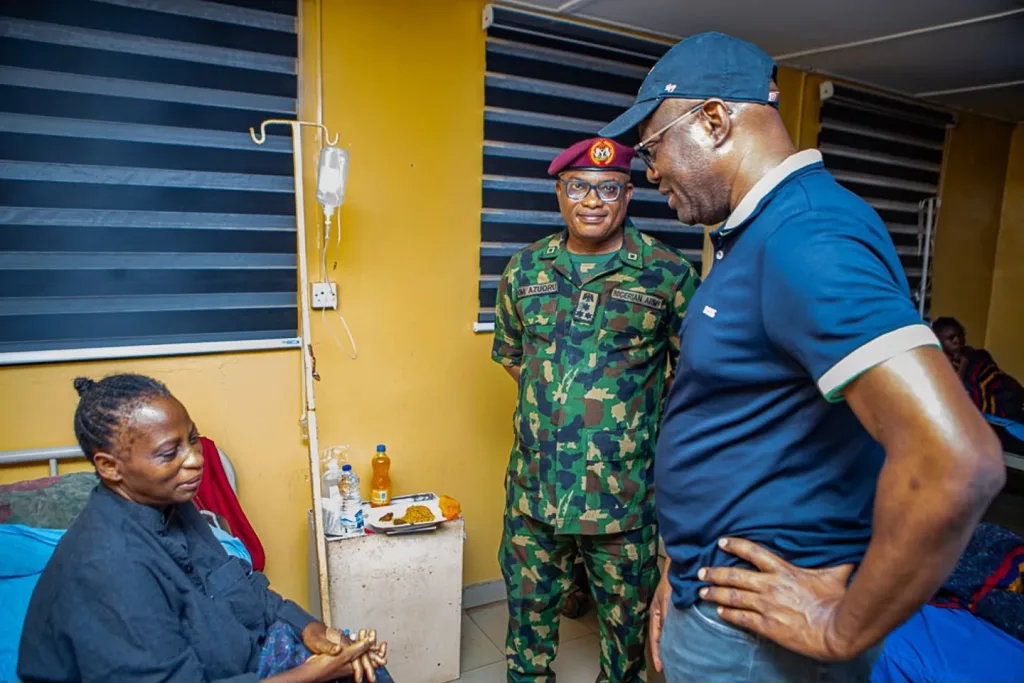
Governor Seyi Makinde (right) is pictured visiting a teacher who was kidnapped by terrorists in May, following her release from captivity. The visit took place at a hospital in Oyo State on July 11, 2026. The image was released by the Oyo State government house.
Conflicting official accounts have raised questions over whether the Oyo abductees were rescued or released after negotiations.
The return of the pupils and teachers abducted from schools in Oyo State has brought widespread relief, but conflicting language used by government and security officials has triggered questions about how the victims actually regained their freedom.
While the Presidency initially described the development as a successful rescue operation carried out by security agencies, a subsequent statement by the Nigerian Army said the abductors were placed under sustained pressure and eventually released the captives “unconditionally.”
The apparent difference between the two accounts has fuelled a public debate: Were the pupils and teachers physically rescued from their captors during a military operation, or were they released by the abductors following negotiations, arrests and other forms of government pressure?
The victims were abducted on May 15, 2026, when armed attackers invaded three schools in Oriire Local Government Area of Oyo State.
After spending 56 days in captivity, 44 surviving pupils and teachers regained their freedom on July 10.
Announcing the development, presidential spokesperson Bayo Onanuga said the victims had been “rescued” by security agencies.
President Bola Tinubu also described their freedom as the outcome of a military, police and intelligence-led operation in which eight suspected kidnappers were arrested and other members of the group were reportedly killed.
Tinubu maintained that no ransom was paid and no concession was made to the abductors. The Presidency also denied granting the kidnappers’ demand for the release of a detained militant commander standing trial for terrorism.
However, the Army’s detailed account did not describe troops entering the kidnappers’ camp and physically extracting the victims.
Instead, the military said the month-long operation concentrated on identifying the masterminds of the abduction, arresting suspects, dismantling logistics networks, disrupting informants and targeting hideouts connected to the group.
According to the Army, multiple arrests made in Oyo State and other parts of the country disorganised the network and placed overwhelming pressure on its members, “ultimately” compelling the group to release the pupils and teachers unconditionally.
That explanation has led some observers to argue that the event more closely resembled a pressured release than a conventional hostage-rescue operation.

In a direct rescue mission, security personnel would ordinarily locate the hostages, confront or overpower their captors and remove the victims from the location.
The Army’s statement, however, suggests that the wider security campaign weakened the group until the abductors decided to let the captives go.
The military can still reasonably describe the broader operation as a rescue effort because its actions allegedly created the conditions that secured the victims’ freedom.
Related: Teacher Kidnapped In Oyo Beheaded By Bandits
Nevertheless, questions remain over whether troops were physically present when the captives were released, where the handover occurred and whether any form of communication took place between the government and the abductors.
Abductors Had Demanded Prisoner Exchange
The controversy is further complicated by earlier revelations that the kidnappers had attempted to use the pupils and teachers as bargaining chips.
Defence Minister Christopher Musa disclosed shortly before the victims regained their freedom that the abductors were demanding the release of some of their commanders held by the government.
He said the group threatened to kill the captives if troops attempted to move closer to their location.
The disclosure confirmed that demands had been communicated, although it did not establish that the government accepted them or entered a formal agreement with the group.
Reports had also circulated that ransom was paid to secure the captives’ release. The Oyo State Government rejected the allegations on July 3, describing them as false and misleading.
It maintained that neither the state nor the Federal Government had paid ransom, directly or indirectly.
An account attributed to former Department of State Services operative and security analyst Seyi Adetayo suggested that security agencies rejected the abductors’ demands and instead arrested people close to members of the group, disrupted supply routes and blocked possible escape channels.
According to the account, these pressure tactics eventually forced the kidnappers to free the victims.
However, the alleged arrests of relatives and associates have not been fully detailed in an official security briefing.
Police Initially Unable to Explain Release
The uncertainty was heightened by the initial response from the Oyo State Commissioner of Police, Olugbenga Abimbola.
Shortly after the captives regained their freedom, Abimbola said security agencies were still gathering details and could not immediately confirm whether the victims had been rescued during an operation or released by their abductors.
His comments contrasted with the Presidency’s immediate declaration that a rescue had taken place and reinforced demands for a fuller explanation of what happened during the final hours of the victims’ captivity.
The government has said some terrorists were killed and eight suspects arrested during the wider operation. The Army also acknowledged casualties among security personnel but did not disclose their identities, the circumstances in which they occurred or whether the casualties were recorded during the final recovery of the hostages.
Pressure Operation or Negotiated Settlement?
Based on the information currently available, there is no verified evidence that the government paid ransom, released a detained terrorist or formally accepted the abductors’ conditions.
There is equally no detailed public account showing that troops stormed the captors’ location and physically removed the pupils and teachers during an armed confrontation.
The official explanation points instead to an intelligence and pressure campaign involving arrests, disruption of the group’s network and the targeting of its logistics.
That campaign, according to the Army, forced the abductors to release the captives without receiving their publicly known demands.
Therefore, describing the development simply as a “rescue” may not convey the full complexity of the operation.
A more precise description may be that security pressure compelled the abductors to release the victims.
However, until the government provides a detailed account of the final handover, including where the victims were found, who received them and whether intermediaries were involved, the possibility of undisclosed communication or negotiation will continue to generate speculation.
The safe return of the pupils and teachers remains the most important outcome.
But greater transparency is necessary, both to strengthen public trust and to clarify whether the operation represents a successful model for rescuing other Nigerians still being held by armed groups.
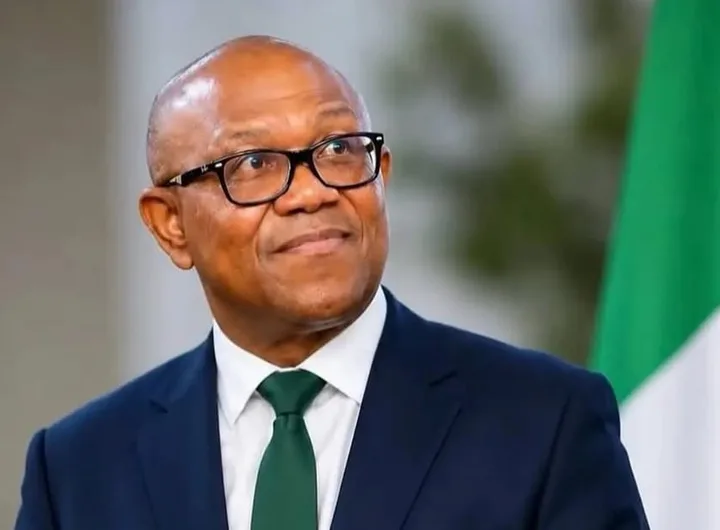 APC Dismisses Obi’s 2027 Chances, Says He Mistook 2023 Momentum For Lasting Political Capital
 ![Fury on the streets of Tirana, Albania: Protesters shattered the Education Ministry’s windows, flattened its perimeter fence and set billboards ablaze as unrest gripped the Albanian capital. [Hameraldi Agolli/AP Photo]](https://www.lionscrib.com/wp-content/uploads/2026/10/image-37-720x530.webp) Violent Clashes Erupt In Albania As Protesters Demand Prime Minister’s Resignation
Violent Clashes Erupt In Albania As Protesters Demand Prime Minister’s Resignation 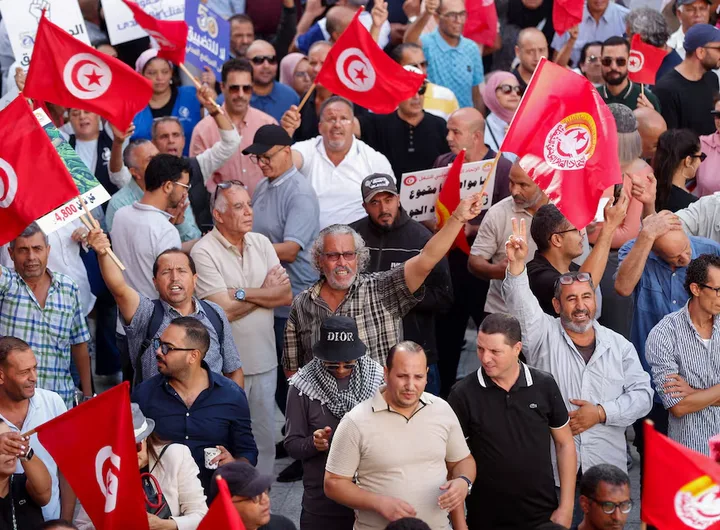 Tunisians Take To The Streets As Anger Over Democracy And Economy Grows
  Elon Musk’s Tesla Unveils First Flying Car In History
 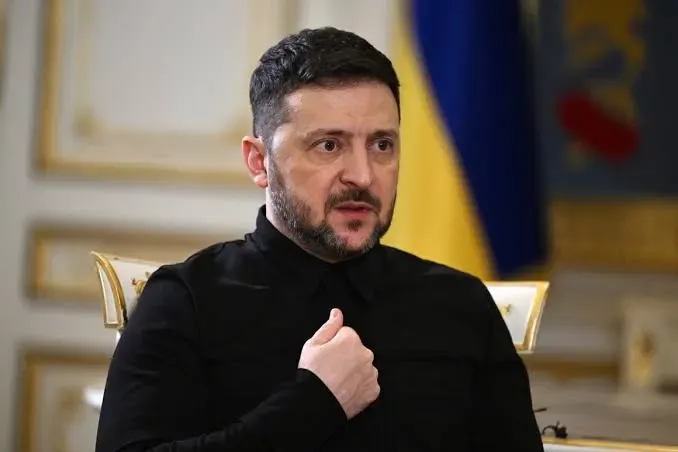 Ukraine To Resume Refinery Strikes As Zelensky Pushes Back On US Pressure
  Former Somali Refugee Sagal Abdi-Wali Sworn In As British MP