
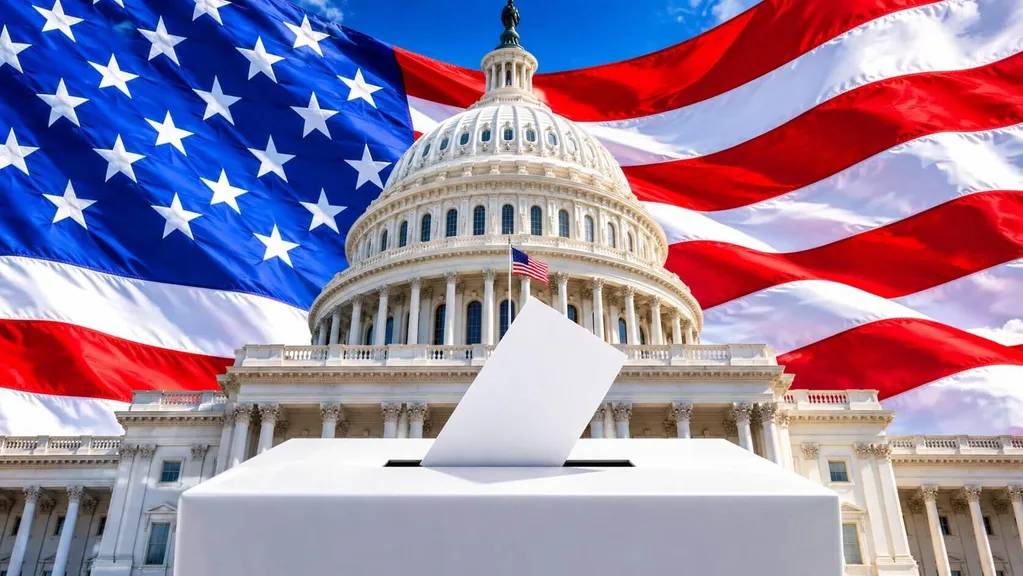
The US midterm elections hold on Tuesday, November 3, 2026
As Americans head to the polls, the 2026 midterm elections could reshape Congress and influence the nation’s political direction.
The United States heads to the polls on November 3, 2026, for midterm elections that could significantly reshape the country’s political landscape.
Beyond determining which party controls Congress, the elections will provide an important measure of public opinion on President Donald Trump’s administration and the direction of American governance.
At stake are all 435 seats in the House of Representatives, 35 Senate seats, and 36 governorships.
Republicans currently control both chambers of Congress, although their narrow majorities leave the balance of power open to change.
The Economy and Cost of Living
Economic concerns remain central to the election. Inflation, housing affordability, employment, and household expenses are influencing political discussions nationwide.
Republicans have emphasized economic growth, tax policies, and deregulation, while Democrats have focused on affordability, healthcare costs, and the financial pressures facing working families.
Related: Trump Accused Of Bribery Over $5,000 Pledge To Voters
For many voters, the central question is whether government policies are improving their everyday financial circumstances.
Immigration and National Security
Immigration remains another major dividing line. Republicans have emphasized stricter border enforcement and immigration controls, while Democrats have raised concerns about enforcement practices, due process, and the need for immigration reform.
These disagreements reflect broader debates about national security, economic priorities, humanitarian responsibilities, and the government’s approach to border management.
The Battle for Congressional Control
The election’s most significant institutional consequence involves the balance of power in Washington.
If Republicans retain control of both chambers, the administration would maintain greater legislative support for advancing its policies.
If Democrats secure a majority in either chamber, they would gain additional authority to influence legislation, conduct congressional oversight, and challenge administration priorities.
However, divided government would not automatically prevent cooperation, particularly on issues requiring bipartisan agreements.
Voter Participation and the Road Ahead
Voter turnout, campaign organization, and competitive congressional districts will play important roles in determining the final results.
Although national political debates dominate coverage, local concerns and individual candidates could influence voting patterns across different states.
The implications also extend beyond domestic politics, potentially affecting US positions on international trade, foreign relations, and government spending.
Ultimately, the 2026 midterm elections represent an important democratic exercise in political representation and accountability.
Regardless of which party gains control, the results will shape the relationship between Congress and the presidency, influence legislative priorities, and establish the political environment leading toward the 2028 presidential election.
The broader significance lies not simply in partisan gains or losses, but in how elected officials respond to the economic, social, and institutional concerns expressed by American voters.
 Russia-Africa Summit: Putin Pushes To Deepen Ties With the Continent
 Atiku Warns Against Postponement Of 2027 Presidential Election
 Tragedy In Spain: 64 Killed, Over 100 Injured In Devastating High-Speed Train Collision
 Tinubu Seeks Senate Approval For $20.5bn, €1.04bn In External Loans
 Israel Votes In Crucial Election As Netanyahu Faces Tough Challenge To Retain Power
 Harry Kane Makes History As First Englishman To Win Ballon d’Or In 25 Years
 US Midterm Elections 2026: A Defining Moment For America’s Political Future
 Khloe Kardashian Explains Why She Has Stayed Single For Four Years