
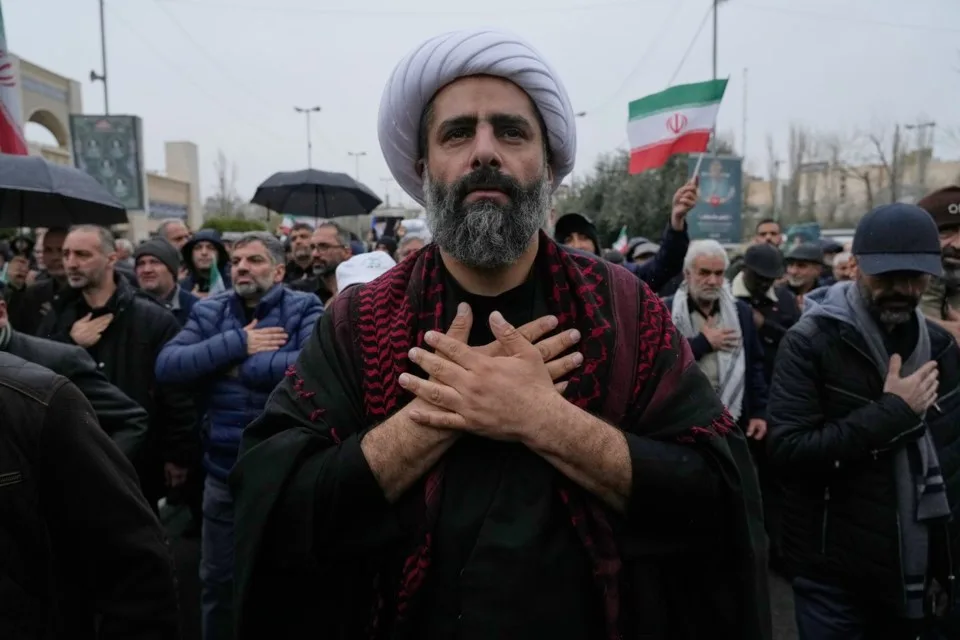
Iranians line up the stress in demonstration as the fighting continues/AP
Trump issued a warning to destroy Iran’s power facilities should the Strait of Hormuz remain closed.
Iran has put the United States on notice, threatening to target critical infrastructure throughout the Middle East if Donald Trump makes good on his ultimatum to bomb Iranian power plants over the closure of the Strait of Hormuz.
Trump gave Iran a 48-hour window, warning that the U.S. would “obliterate” its major power facilities if the vital oil shipping corridor — responsible for roughly one-fifth of global crude oil movement — was not fully reopened without conditions or intimidation.
Iran’s military leadership fired back, cautioning that any assault on its infrastructure would invite retaliatory strikes against American interests across the region, encompassing energy grids, IT systems, and water desalination plants.
The standoff is rooted in an ongoing cycle of military exchanges. Iran recently fired missiles deep into southern Israel, striking areas in the vicinity of Dimona and Arad and leaving over 100 people injured after several projectiles evaded air defence systems. Israel answered with renewed airstrikes on Tehran.
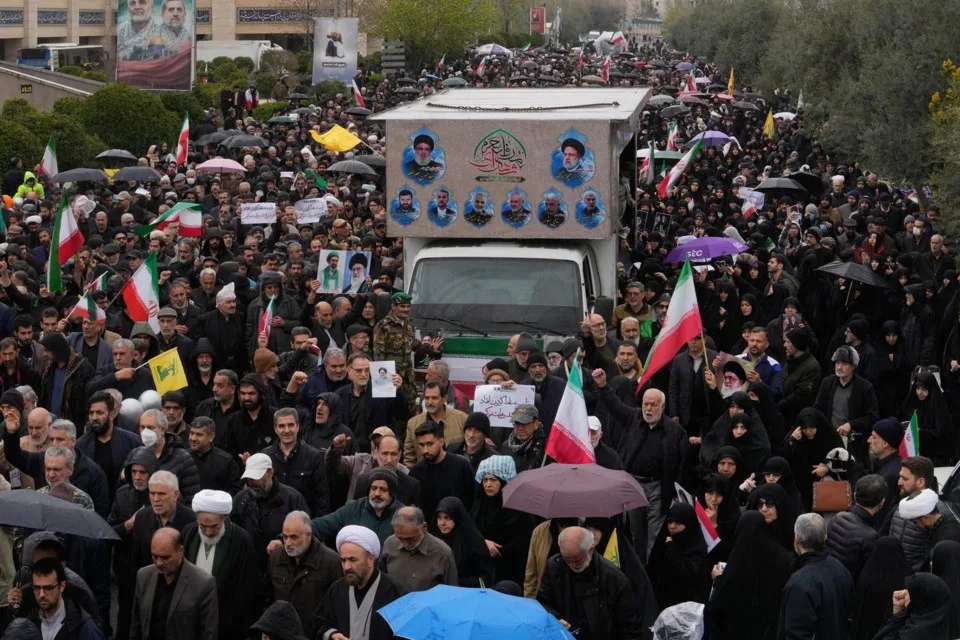
The intensifying confrontation has sent shockwaves through global energy markets.
Brent crude has climbed past $105 per barrel as investors and governments alike brace for a sustained disruption to one of the world’s most critical oil supply arteries.
The crisis has also triggered widespread international responses. The UK, France, Germany, and a number of other nations have publicly condemned what they characterised as Iran’s de facto blockade of the strait, while Trump has taken aim at NATO allies for falling short in efforts to secure the waterway.
On the ground, the U.S. military has ramped up its regional presence, deploying additional Marines and launching strikes on Iranian coastal installations to degrade its capacity to threaten shipping lanes.
Iran’s military operations have extended beyond Israel, with missile and drone attacks reported against Gulf nations including Saudi Arabia and the United Arab Emirates.
A long-range strike targeting the joint U.S.-UK military base at Diego Garcia was also attempted but ultimately failed to reach its mark.
Despite absorbing significant losses over weeks of sustained conflict, analysts note that Iran’s offensive capabilities have proven more durable than many anticipated, with its ability to carry out strikes remaining largely intact.
The situation continues to teeter on a knife’s edge, with both parties signalling their readiness for further escalation — even as the Strait of Hormuz’s immense strategic and economic weight keeps markets and world leaders watching closely.
 Trump Calls For New Ukrainian Leadership Amid Clash With Zelensky Over US-Russia Diesel Agreement
  Thousands Detained As Massive Protests Erupt In India Over Alleged Electoral Fraud
  Atiku Mocks Tinubu As A “Dull Student,” Says Fuel Discount Was Copied From His Proposal
  South African Human Rights Champion Navi Pillay Wins 2026 Nobel Peace Prize
  Unrest Erupts in New York After ICE Agent Shoots Man During Immigration Operation
  Tinubu Announces 30-Day Fuel Discount To Ease Cost Of Living
  “My baby is coming anytime soon, it may be twins” — Mr Eazi Shares Excitement Ahead Of Fatherhood