
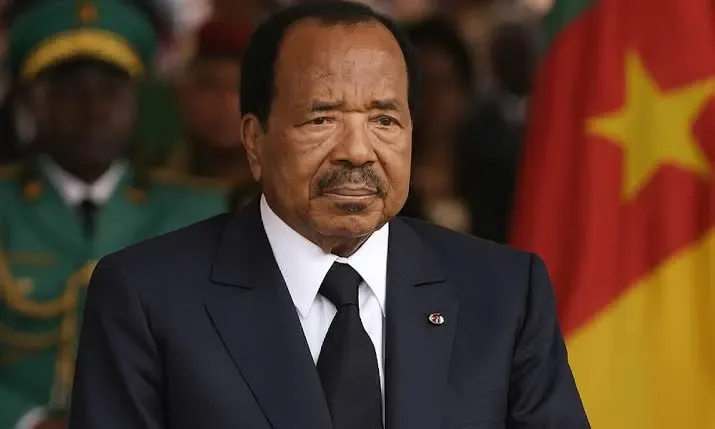
Paul Biya, 93, has been in power since 1982/Photo: The Habari Network
Franck Biya steps into Cameroon’s vice presidency and takes command of the military as political tensions boil over amid contested elections and growing unrest.
President Paul Biya of Cameroon has named his son, Franck Emmanuel Biya, as Vice President and Head of the Armed Forces, cementing the family’s hold over the country’s political and military apparatus amid growing unrest.
The appointment was formalised through an official decree dated April 4, 2026, which also named Franck as Minister Delegate at the Ministry of Defence, positioning him at the heart of Cameroon’s security structure.
The decree reads: “Mr Franck Emmanuel BIYA is appointed Vice President of the Republic of Cameroon.”
It further states: “Mr Franck Emmanuel BIYA is appointed Head of the Armed Forces.”
On his additional portfolio, the document notes: “The Vice President of the Republic, Mr Franck Emmanuel BIYA, is also appointed Minister Delegate at the Ministry of Defence of the Republic of Cameroon.”
The presidency grounded the appointments in constitutional provisions and defence legislation, citing “service requirements” and directing that the decree “shall be registered, published according to the procedure of urgency, and inserted in the Official Gazette.”
Related: 92-Year-Old Paul Biya Wins Cameroonian Presidential Election
The development follows Biya’s swearing-in for a record eighth term after a disputed election that has since sparked widespread protests and drawn international attention.
The 93-year-old secured 54 percent of the vote, defeating opposition candidate Issa Tchiroma Bakary, who received 35 percent.
Tchiroma Bakary has refused to accept the result, claiming he was the legitimate winner and alleging electoral fraud — accusations the government has flatly denied.
Biya, for his part, called the election “satisfactory” and praised the electoral commission for its handling of the process, while also commending security forces for managing the protests — though without responding to allegations of excessive force.
The Constitutional Council subsequently dismissed several petitions contesting the results, ruling them either insufficiently substantiated or outside its jurisdiction.
Having governed Cameroon since 1982 following the exit of former President Ahmadou Ahidjo, Biya now faces intensified criticism from opposition voices who argue he is consolidating power across both civilian and military institutions.
The elevation of his son to two of the country’s most powerful positions is expected to deepen concerns around succession and democratic accountability in the Central African nation, even as pressure for reform continues to mount.
 Russia Ready To Return To Ukraine Talks, Putin Says, Insisting On Security For Europe
  Nigeria Tightens Airport Screening After First Ebola Case
  Nollywood Mourns As Veteran Actor Francis Duru Dies At 57
  APC Dismisses Obi’s 2027 Chances, Says He Mistook 2023 Momentum For Lasting Political Capital
 ![Fury on the streets of Tirana, Albania: Protesters shattered the Education Ministry’s windows, flattened its perimeter fence and set billboards ablaze as unrest gripped the Albanian capital. [Hameraldi Agolli/AP Photo]](https://www.lionscrib.com/wp-content/uploads/2026/10/image-37-720x530.webp) Violent Clashes Erupt In Albania As Protesters Demand Prime Minister’s Resignation
Violent Clashes Erupt In Albania As Protesters Demand Prime Minister’s Resignation  Tunisians Take To The Streets As Anger Over Democracy And Economy Grows