
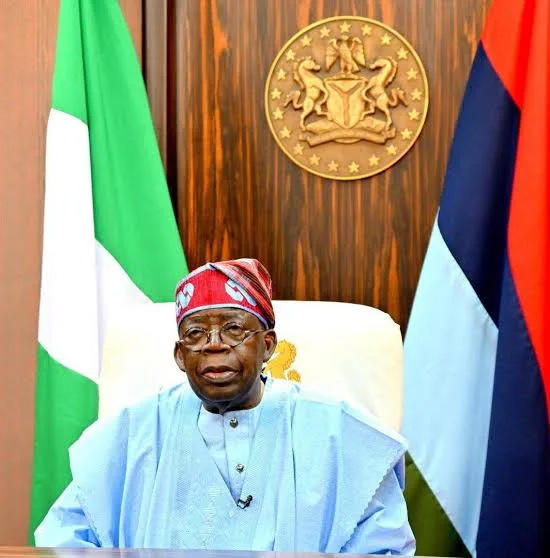
Despite the harsh economic realities confronting Nigerians, Tinubu says his economic policies are yielding positive results/Lionscrib
As Nigeria marks 66 years of independence, President Tinubu’s address offers a window into his administration’s next economic chapter.
President Bola Ahmed Tinubu used Nigeria’s 66th Independence Day address on October 1, 2026, to make one central argument: the painful phase of his administration’s economic reforms is giving way to a new period of growth and prosperity.
Titled “From Reform to Prosperity,” the speech was both a defence of the difficult economic decisions taken since 2023 and an attempt to shift the national conversation towards what comes next.
Tinubu acknowledged that Nigeria’s 66-year journey since independence has included war, military rule, economic crises, insecurity and political instability.
But much of the speech quickly turned to the economy and the policies that have defined his presidency.
Defending the reforms
One of the strongest themes in the address was Tinubu’s refusal to accept the argument that his administration created Nigeria’s economic problems.
According to the president, long-standing economic distortions were already present before his government took office, while policies such as subsidy removal and foreign-exchange reforms were designed to confront them.
He presented the reforms almost as painful medical treatment: difficult in the short term but necessary to address deeper problems.
He also rejected calls for a return to previous subsidy arrangements, arguing that reversing course would undermine the progress already made.
This is important because subsidy removal has been one of the most consequential decisions of the Tinubu administration.
Related: Peter Obi: President Tinubu Is Exhausted And Deserves A Peaceful Retirement
While it reduced a major fiscal burden, the policy, alongside exchange-rate changes and other factors, contributed to sharp increases in transportation, food and other living costs.
The president’s message was therefore clear: the government does not intend to reverse its economic direction.
The numbers are improving, but living conditions remain the bigger test
Tinubu pointed to several economic indicators as evidence that the reforms are working.
He said economic growth had exceeded 4 per cent, inflation had fallen significantly from its peak, foreign reserves had recovered, the foreign-exchange market had become more stable and Nigeria recorded more than $6 billion in non-oil exports in 2025.
Some of these claims are supported by external and official data.
The Nigerian Export Promotion Council reported that non-oil exports reached a record $6.1 billion in 2025, up 11.5 per cent from the previous year.
The IMF has also acknowledged improvements in Nigeria’s macroeconomic stability since the reforms began.
Its June 2026 assessment projected economic growth of about 4.1 per cent for 2026 and noted improvements in foreign reserves, the foreign-exchange system and other external buffers.
However, this is where the biggest challenge facing the president’s argument becomes visible.
Better macroeconomic indicators do not automatically mean that households feel economically better off.
The same IMF assessment that praised stronger macroeconomic stability also warned that conditions remained difficult for many Nigerians.
It estimated poverty at 63 per cent using the national poverty line and said millions faced food insecurity.
That gap between improving national statistics and household experience may ultimately determine how Nigerians interpret the speech.
A shift from stabilisation to the cost of living
Perhaps the most important policy signal from the address was Tinubu’s declaration that the government is moving beyond economic stabilisation.
The president described the previous three years as a period in which government concentrated on repairing the foundations of the economy.
Now, he said, the focus would shift towards what he called “shared and widespread prosperity.”
He specifically identified the cost of living as a priority.
The government, according to the speech, intends to tackle this through increased agricultural production, irrigation, mechanisation, better access to fertiliser and seeds, improved storage, transportation infrastructure, roads, railways and ports.
Tinubu also placed jobs, businesses and industrial growth at the centre of the administration’s next economic phase.
This represents an important change in emphasis. The government is increasingly being judged not simply by whether inflation declines or reserves rise, but by whether food becomes more affordable, jobs become easier to find and businesses can operate at lower costs.
There was also an unmistakable political context
The timing of the speech matters.
Nigeria is approaching another presidential election, meaning the 2026 Independence Day address also provides Tinubu with an opportunity to define the record of his administration before voters make another national political choice.
The address repeatedly contrasts the economic situation inherited by the administration with what it says has been achieved since 2023.
It also rejects proposals to reverse key reforms, drawing a clear dividing line between Tinubu’s economic approach and some of the alternatives being discussed by political opponents.
Opposition figures have challenged this account. Former Vice-President Atiku Abubakar, for example, used Independence Day to argue that poverty had worsened under the current administration, while former minister Solomon Dalung criticised Tinubu’s address as failing to sufficiently reflect the experience of ordinary Nigerians.
Those responses highlight the central debate likely to continue beyond Independence Day: whether improvements in Nigeria’s macroeconomic indicators are translating quickly enough into improvements in everyday life.
The real test begins after the speech
Tinubu’s 2026 Independence Day address was ultimately less about announcing a dramatic new policy than about declaring the end of one phase of his presidency and the beginning of another.
The government believes the toughest structural corrections have been made. The president’s argument is that Nigeria has stabilised sufficiently to begin converting those reforms into jobs, lower costs and broader prosperity.
The economic data provides some evidence of greater macroeconomic stability. But it also shows why the next stage may prove more difficult.
For millions of Nigerians, the success of the reforms will not be measured primarily by foreign reserves, export earnings or GDP growth.
It will be measured at the market, at the petrol station, in electricity bills, in salaries, in employment opportunities and in whether families feel that their incomes can once again meet their basic needs.
That is the standard against which Tinubu’s promised transition “from reform to prosperity” will increasingly be assessed.
 South Africa Unveils New Measures Against Gender-Based Violence After String of Femicides Sparks National Outrage
  Why Trump Rejected Iran’s Peace Proposal
  At Least 27 Dead in Two Separate Mass Shootings in South Africa
  Trump Defends Iran War, Targets ICC In 2026 UN General Assembly Speech
  President Tinubu Extends Working Vacation
  37 Suspected Illegal Miners Die In NSCDC Custody
  Tinubu’s 2026 Independence Day Speech: From Reform To Prosperity, But Nigerians Await The Results